Discover our guide to the best authors like Robin Hobb. Their books are must-reads for a fantastical, epic journey through mythical worlds.
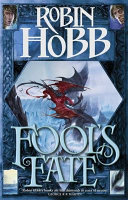
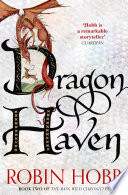
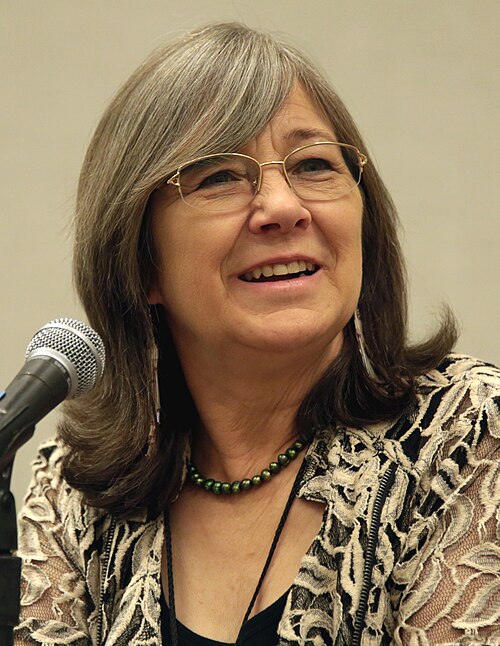
Robin Hobb and Megan Lindholm are two pen names for the same author: Margaret Astrid Lindholm Ogden. This fantasy writer is known best for her Realm of the ElderlingsSeries, written under the Robin Hobb name. This book comprises 16 books divided into five series, includingTawny Man Trilogy**, theRain Wild Chronicles**, the*Liveship Traders Trilogy**, theFarseer Trilogy**, and theFitz the Fool Trilogy*. These epic fantasies started withAssassin’s Apprenticein 1995 and ended withAssassin’s Fate*in 2017
For more recommendations, you might also enjoy exploring best dystopian books, authors like George Orwell, best science fiction books.
Table of Contents
Open Table of Contents
Must-Read Authors Like Robin Hobb
1. George R. R. Martin, 1948-present
George R.R. Martin, who sometimes goes by the acronym GRRM, was born in New Jersey. After his family lost their wealth due to the Great Depression, Martin had to find a way to make money as a young person. As a child, he started writing and selling monster stories to other neighborhood children, which sparked his love for writing. Martin graduated from Northwestern University’s Medill School of Journalism with a B.S. in Journalism in 1970. At that time, he began selling science fiction short stories.
The writer spent a short time teaching at Clarke University, but in 1977 retired from teaching to write full-time. He has several awards, including Hugo Awards for six works and Locus Awards for several. He is most famous for theA Song of Ice and Fireseries of fantasy novels, which started with the 1996 book A Game of Thrones. These books inspired games and the HBO television series of the same name.
“Some old wounds never truly heal, and bleed again at the slightest word.”
George R.R. Martin,A Game of Thrones
2. Robert Jordan, 1948-2007
Robert Jordan is the pen name for author James Oliver Rigney. This epic fantasy writer is best known for The Wheel of Timeseries, which includes 14 books and a prequel that takes a group of heroes on a quest against enemy soldiers and the undead. The first book, The Eye of the World, was published in 1990. Jordan died in 2007 before he completed the books, but he told his family his plot ideas. Author Brandon Sanderson completed the final three books to finish out the saga. Jordan also wrote some stories in the*Conan the Barbarian *series.
“I will hate the man you choose because he isn’t me, and love him if he makes you smile.”
Robert Jordan, The Eye of the World
3. J.R.R. Tolkien, 1892-1973
Few names are quite as synonymous with the epic fantasy as J.R.R. Tolkien. It could be said that this early 1900s British author created the genre with The Lord of the Ringstrilogy and*The Hobbit.*These high fantasy books follow the story of Middle-earth and dwarves, hobbits and wizards that go on an epic quest to protect it.*The Lord of the Rings**, originally published in 1954, is one of the world’s best-selling books, with over 150 million copies sold.
Tolkien was employed as a professor and wrote his fantasy books as a pastime. He developed an Elvish language that he wove into his books. The Lord of the Rings*was not originally a trilogy. Still, modern versions have been published in three parts:*The Fellowship of the Ring, The Two Towers, andThe Return of the King.*
“All that is gold does not glitter Not all those who wander are lost; The old that is strong does not wither Deep roots are not reached by the frost.”
J.R.R. Tolkien, The Lord of the Rings
4. Terry Goodkind, 1948-2020
Terry Goodkind is an American writer known for The Sword of Truthepic fantasy series and the suspense novel,The Law of Nines**. With over 26 million copies in 20 languages, TheSword of Truth is a very successful modern series. In 2008, it was adapted into a TV series calledLegend of the Seeker._ Goodkind was born in Nebraska and did poorly in school due to dyslexia. He turned to writing by publishing his first book,_Wizard’s First Rule, in 1994. The series has 12 books; only two have been on the*New York Times *bestseller list.
“People are stupid. They will believe a lie because they want to believe it’s true, or because they are afraid it might be true.”
Terry Goodkind, Wizard’s First Rule
5. Patrick Rothfuss, 1973-present
Patrick Rothfuss was born in Wisconsin and attended Wisconsin University and Washington State University. While in college, he wrote for the campus newspaper and created a popular parody column. In 2002 he won the Writers of the Future for his short story “The Road to Levneshir,” an excerpt from the novel he would later publish called The Wise Man’s Fear. HisKingkiller Chronicleseries, starting withThe Name of the Windin 2007 and ending withThe Slow Regard of SilentThingsin 2014, fits the epic fantasy genre. It also earned him Publisher’s Weekly’s Best Books of the Year accolade and the Quill Award in 2007.
“It’s like everyone tells a story about themselves inside their own head. Always. All the time. That story makes you what you are. We build ourselves out of that story.”
Patrick Rothfuss, The Name of the Wind
6. Joe Abercrombie, 1974-present
Best known for his First Law Trilogy, Joe Abercrombie is a modern fantasy author originally from England. As a child, Abercrombie went to a boring all-boys school and started drawing maps of mythical places. This eventually led to the creation of his epicThe First Lawtrilogy. He published his first book, The Blade Itself, in 2004.The sequels of they Are Hanged, andArgument of Kingswere published in 2007 and 2008. Ambercrombie’s standalone novel,Red Country, was on the*New York Times *bestseller list in 2012. Books by this new author are known for having an edgy and humorous take on the fantasy novel.
“Once you’ve got a task to do, it’s better to do it than live with the fear of it.”
Joe Abercrombie, The Blade Itself
7. Guy Gavriel Kay, 1954-present
Guy Gavriel Kay is a Canadian fantasy author known for The Fionavar Tapestry. Kay got his start in literature when Christopher Tolkien chose him to edit his late father’s unpublished writings, which becameThe Silmarillion. After the editing job, Kay studied law at the University of Toronto and started writing for a Canadian radio broadcast. The Summer Tree,which he published in 1984, was his first fantasy and the first book in The Fionavar Tapestry. Since publishing his first book, he has published ten standalone books andThe Sarantine Mosaicset of two books.
“We salvage what we can, what truly matters to us, even at the gates of despair.”
Guy Gavriel Kay, The Summer Tree
8. Tad Williams, 1957-present
Tad Williams is an internationally best-selling author of fantasy novels who is originally from California. Williams writes fantasy and science fiction novels, including the Memory, Sorrow, and Thorn, Otherland, and*Shadowmarch *series. He also wrote some standalone novels. Before launching his literary career, Williams worked several odd jobs, including food service, DJ work, and newspaper delivery. When Williams wrote his first manuscript, Tailchaser’s Song, the publishers weren’t looking at it. He fabricated a story about needing a copy back because he lost his original. This worked to get them to take a look. The book was published in 1985, launching his successful literary career.
“But our own selves are like pearls, created by layer after layer of present laid over past until the original thing is completely hidden.”
Tad Williams, Tailchaser’s Song
9. Scott Lynch, 1977-present
Born in Minnesota, Scott Lynch lived in both Wisconsin and Massachusetts. In 2006 he published The Lies of Locke Lamora,his first novel, followed byRed Seas Under Red Skiesa year later. These books with their equals were theGentleman Bastard Sequenceseries, an epic fantasy that follows a young professional thief and con artist in a dystopian world. In 2008, Lynch won the British Fantasy Awards for Best Newcomer. Lynch is working on a new anthology,*The Book of Magic**.
“There’s no freedom quite like the freedom of being constantly underestimated.”
Scott Lynch, The Lies of Locke Lamora
Frequently Asked Questions
What’s the difference between fantasy and science fiction?
Fantasy typically involves magical elements, supernatural creatures, and worlds that don’t follow our natural laws, while science fiction explores futuristic technology, space travel, and scientific concepts. Fantasy often looks backward to myth and legend, while sci-fi looks forward to possibilities.
What makes a great fantasy or science fiction book?
Great fantasy and sci-fi books feature well-developed worlds, consistent internal logic, compelling characters, and themes that resonate beyond the genre elements. They should transport readers while telling meaningful stories about human nature and society.
Are fantasy and science fiction books just escapism?
While fantasy and sci-fi can provide escapism, the best books in these genres use their settings to explore real-world themes, social issues, and human nature. They can offer fresh perspectives on familiar problems through their unique contexts.
Why should I read fantasy or science fiction?
Reading fantasy and sci-fi expands your imagination, introduces new ideas and perspectives, and can provide insights into human nature and society through different lenses. These genres often tackle complex themes in accessible and entertaining ways.
10. Brent Weeks
Born in Montana in 1977, Brent Weeks is one of the younger writers on this list. Before launching his writing career, he attended Hillsdale College, graduating in 2000 with an English degree. He has two complete series, the *Night Angel Trilogy,and the LightbringerSeries. The Night Angel Trilogy, published in 2008, has been printed in over 14 languages with a million copies in print, which is quite successful for a relatively new series. His 2012 book The Blinding Knife, the second book in theLightbringer *series, won the Reddit Stabby and Gemmell awards.
“If you are not free to say no, your yes is meaningless.”
Brent Weeks, The Blinding Knife
If you liked this post, you might also be interested in our list of the best Bildungsroman authors).
Why Robin Hobb’s Style Resonates in 2025
In an era of rapid-fire entertainment and instant gratification, Robin Hobb’s deep character development and emotional complexity offer something increasingly rare: stories that require investment and reward patience. Her exploration of themes like found family, environmental conservation, and the cost of power feels more relevant than ever in our interconnected yet fragmented world.
What sets Hobb apart—and what the authors below share—is the understanding that fantasy’s greatest magic lies not in spectacular spells, but in authentic human emotion. These writers prove that the best fantasy doesn’t escape reality; it illuminates it through the lens of the impossible.
10 Must-Read Authors Like Robin Hobb
For more fantasy recommendations, you might also enjoy exploring best fantasy authors, authors like Brandon Sanderson, authors like George R.R. Martin, or discover our comprehensive guide to best fantasy authors.
1. George R. R. Martin, 1948-present
George R.R. Martin, who sometimes goes by the acronym GRRM, was born in New Jersey. After his family lost their wealth due to the Great Depression, Martin had to find a way to make money as a young person. As a child, he started writing and selling monster stories to other neighborhood children, which sparked his love for writing. Martin graduated from Northwestern University’s Medill School of Journalism with a B.S. in Journalism in 1970.
The writer spent a short time teaching at Clarke University, but in 1977 retired from teaching to write full-time. He has several awards, including Hugo Awards for six works and Locus Awards for several. He is most famous for the A Song of Ice and Fire series of fantasy novels, which started with the 1996 book A Game of Thrones. These books inspired games and the HBO television series of the same name.
Why Hobb fans love Martin: Both authors excel at creating morally complex characters whose decisions have lasting consequences. Like Hobb’s Fitz, Martin’s protagonists often face impossible choices that reveal their deepest humanity.
“Some old wounds never truly heal, and bleed again at the slightest word.” — George R.R. Martin, A Game of Thrones
2. Robert Jordan, 1948-2007
Robert Jordan is the pen name for author James Oliver Rigney. This epic fantasy writer is best known for The Wheel of Time series, which includes 14 books and a prequel that takes a group of heroes on a quest against enemy soldiers and the undead. The first book, The Eye of the World, was published in 1990. Jordan died in 2007 before he completed the books, but he told his family his plot ideas. Author Brandon Sanderson completed the final three books to finish out the saga. Jordan also wrote some stories in the Conan the Barbarian series.
Character Growth Mastery: Like Hobb, Jordan understood that epic fantasy works best when readers deeply care about the characters. Both authors take time to develop their protagonists through multiple books, allowing for genuine character evolution.
“I will hate the man you choose because he isn’t me, and love him if he makes you smile.” — Robert Jordan, The Eye of the World
3. J.R.R. Tolkien, 1892-1973
Few names are quite as synonymous with epic fantasy as J.R.R. Tolkien. It could be said that this early 1900s British author created the genre with The Lord of the Rings trilogy and The Hobbit. These high fantasy books follow the story of Middle-earth and dwarves, hobbits and wizards that go on an epic quest to protect it. The Lord of the Rings, originally published in 1954, is one of the world’s best-selling books, with over 150 million copies sold.
Tolkien was employed as a professor and wrote his fantasy books as a pastime. He developed an Elvish language that he wove into his books. The Lord of the Rings was not originally a trilogy. Still, modern versions have been published in three parts: The Fellowship of the Ring, The Two Towers, and The Return of the King.
World-Building Foundation: While Tolkien focused more on mythology than psychology, he established the template that Hobb perfected—creating secondary worlds that feel as real and lived-in as our own. Both authors understand that great fantasy requires authentic emotional stakes.
“All that is gold does not glitter,
Not all those who wander are lost;
The old that is strong does not wither,
Deep roots are not reached by the frost.”
— J.R.R. Tolkien, The Lord of the Rings
4. Terry Goodkind, 1948-2020
Terry Goodkind was an American writer known for The Sword of Truth epic fantasy series and the suspense novel, The Law of Nines. With over 26 million copies in 20 languages, The Sword of Truth is a very successful modern series. In 2008, it was adapted into a TV series called Legend of the Seeker.
Goodkind was born in Nebraska and did poorly in school due to dyslexia. He turned to writing by publishing his first book, Wizard’s First Rule, in 1994. The series has 12 books; only two have been on the New York Times bestseller list.
Philosophical Fantasy: Goodkind, like Hobb, believed that fantasy should explore serious themes and moral questions. Both authors use their fantastical settings to examine real-world issues and human nature.
“People are stupid. They will believe a lie because they want to believe it’s true, or because they are afraid it might be true.” — Terry Goodkind, Wizard’s First Rule
5. Patrick Rothfuss, 1973-present
Patrick Rothfuss was born in Wisconsin and attended Wisconsin University and Washington State University. While in college, he wrote for the campus newspaper and created a popular parody column. In 2002 he won the Writers of the Future for his short story “The Road to Levneshir,” an excerpt from the novel he would later publish called The Wise Man’s Fear.
His Kingkiller Chronicle series, starting with The Name of the Wind in 2007 and continuing with The Wise Man’s Fear in 2011, fits the epic fantasy genre. It also earned him Publisher’s Weekly’s Best Books of the Year accolade and the Quill Award in 2007.
Lyrical Storytelling: Rothfuss shares Hobb’s gift for beautiful, emotionally resonant prose. Both authors understand that how a story is told is just as important as what happens in it.
“It’s like everyone tells a story about themselves inside their own head. Always. All the time. That story makes you what you are. We build ourselves out of that story.” — Patrick Rothfuss, The Name of the Wind
6. Joe Abercrombie, 1974-present
Best known for his First Law Trilogy, Joe Abercrombie is a modern fantasy author originally from England. As a child, Abercrombie went to a boring all-boys school and started drawing maps of mythical places. This eventually led to the creation of his epic The First Law trilogy. He published his first book, The Blade Itself, in 2006. Before They Are Hanged and Last Argument of Kings were published in 2007 and 2008. Abercrombie’s standalone novel, Red Country, was on the New York Times bestseller list in 2012.
Books by this author are known for having an edgy and humorous take on the fantasy novel.
Subversive Character Development: Abercrombie, like Hobb, excels at creating characters who subvert fantasy tropes. Both authors show that heroes can be flawed and villains can be sympathetic, creating the moral complexity that makes great fantasy.
“Once you’ve got a task to do, it’s better to do it than live with the fear of it.” — Joe Abercrombie, The Blade Itself
7. Guy Gavriel Kay, 1954-present
Guy Gavriel Kay is a Canadian fantasy author known for The Fionavar Tapestry. Kay got his start in literature when Christopher Tolkien chose him to edit his late father’s unpublished writings, which became The Silmarillion. After the editing job, Kay studied law at the University of Toronto and started writing for a Canadian radio broadcast.
The Summer Tree, which he published in 1984, was his first fantasy and the first book in The Fionavar Tapestry. Since publishing his first book, he has published ten standalone books and The Sarantine Mosaic set of two books.
Historical Fantasy Mastery: Kay shares Hobb’s ability to ground fantasy in authentic human emotion and historical understanding. Both authors create worlds that feel historically plausible while exploring timeless themes about power, love, and sacrifice.
“We salvage what we can, what truly matters to us, even at the gates of despair.” — Guy Gavriel Kay, The Summer Tree
8. Tad Williams, 1957-present
Tad Williams is an internationally best-selling author of fantasy novels who is originally from California. Williams writes fantasy and science fiction novels, including the Memory, Sorrow, and Thorn, Otherland, and Shadowmarch series. He also wrote some standalone novels.
Before launching his literary career, Williams worked several odd jobs, including food service, DJ work, and newspaper delivery. When Williams wrote his first manuscript, Tailchaser’s Song, the publishers weren’t looking at it. He fabricated a story about needing a copy back because he lost his original. This worked to get them to take a look. The book was published in 1985, launching his successful literary career.
Epic Scope with Intimate Moments: Williams, like Hobb, understands that epic fantasy works best when grand adventures are anchored by small, human moments. Both authors excel at balancing sweeping plots with intimate character development.
“But our own selves are like pearls, created by layer after layer of present laid over past until the original thing is completely hidden.” — Tad Williams, Tailchaser’s Song
9. Scott Lynch, 1977-present
Born in Minnesota, Scott Lynch lived in both Wisconsin and Massachusetts. In 2006 he published The Lies of Locke Lamora, his first novel, followed by Red Seas Under Red Skies a year later. These books with their sequels were the Gentleman Bastard Sequence series, an epic fantasy that follows a young professional thief and con artist in a dystopian world. In 2008, Lynch won the British Fantasy Awards for Best Newcomer. Lynch is working on a new anthology, The Book of Magic.
Character-Driven Adventure: Lynch shares Hobb’s talent for creating protagonists whose personal relationships drive the plot. Both authors understand that the best fantasy adventures are really about friendship, loyalty, and the bonds between characters.
“There’s no freedom quite like the freedom of being constantly underestimated.” — Scott Lynch, The Lies of Locke Lamora
10. Brent Weeks
Born in Montana in 1977, Brent Weeks is one of the younger writers on this list. Before launching his writing career, he attended Hillsdale College, graduating in 2000 with an English degree. He has two complete series, the Night Angel Trilogy and the Lightbringer Series.
The Night Angel Trilogy, published in 2008, has been printed in over 14 languages with a million copies in print, which is quite successful for a relatively new series. His 2012 book The Blinding Knife, the second book in the Lightbringer series, won the Reddit Stabby and Gemmell awards.
Modern Character Complexity: Weeks brings Hobb’s emotional depth to a new generation of fantasy readers. Both authors excel at creating protagonists who struggle with moral choices and must live with the consequences of their actions.
“If you are not free to say no, your yes is meaningless.” — Brent Weeks, The Blinding Knife
Finding Your Next Emotional Fantasy Journey
These authors share Robin Hobb’s commitment to character-driven storytelling and emotional authenticity. Whether you’re drawn to Martin’s political complexity, Kay’s historical depth, or Lynch’s adventurous friendships, each offers the deep character development and emotional resonance that makes Hobb’s work so compelling.
Where to start: If you love Hobb’s character growth, try Jordan or Williams. For moral complexity, explore Martin or Abercrombie. If you want beautiful prose with deep emotion, Rothfuss and Kay deliver literary fantasy at its finest.
The best character-driven fantasy doesn’t just transport you to another world—it helps you understand your own emotions and relationships more deeply. These authors prove that fantasy’s greatest magic lies in its ability to illuminate the human heart through the lens of the impossible.