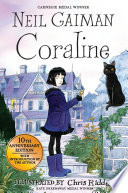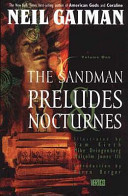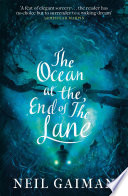
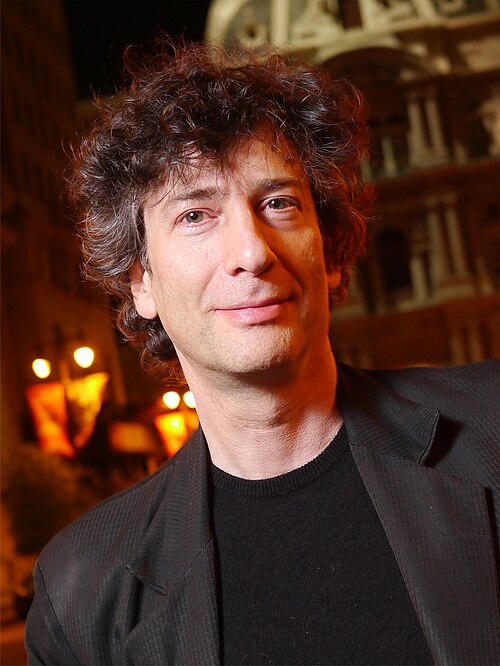
Discover the best authors like Neil Gaiman.
Neil Gaiman is a prolific writer who writes for all ages, from children to adults. Fans will want to has written everything from short stories to graphic novels and film scripts. His contributions to literature make him a popular writer with children through adults, and his books focus on fairy tales, sci-fi themes, and Norse mythology.
For more recommendations, you might also enjoy exploring best fantasy books, best fantasy authors.
Table of Contents
Open Table of Contents
-
- Who Are the Best Authors Like Neil Gaiman?
- 1. Terry Pratchett, 1948-2015
- 2. Diana Wynne Jones, 1934-2011
- 3. Stephen King, 1947-present
- 4. Alan Moore, 1953-present
- 5. Erin Morgenstern, 1978-present
- 6. Douglas Adams, 1952-2001
- 7. N.K. Jemisin, 1972-present
- 8. Philip Pullman, 1946-present
- 9. Susanna Clarke, 1959-present
- 10. Ray Bradbury, 1920-2012
- Frequently Asked Questions
- Must-Read Authors Like Neil Gaiman You Should Read
- 1. Terry Pratchett (1948-2015)
- 2. Diana Wynne Jones (1934-2011)
- 3. Stephen King (1947-present)
- 4. Alan Moore (1953-present)
- 5. Erin Morgenstern (1978-present)
- 6. Douglas Adams (1952-2001)
- 7. N.K. Jemisin (1972-present)
- 8. Philip Pullman (1946-present)
- 9. Susanna Clarke (1959-present)
- 10. Ray Bradbury (1920-2012)
- 1. Terry Pratchett (1948-2015)
Who Are the Best Authors Like Neil Gaiman?
1. Terry Pratchett, 1948-2015
Author Terry Pratchett is wearing a red lanyard, black leather coat, glasses, and black hat
Terry Pratchett published his first story when he was 13 years old, leaving school to pursue writing full-time at age 17. HisDiscworldseries is one of the most popular of his works, and he was knighted in 2009 after his ongoing success. The Colour of Magicwas his firstDiscworldseries book, and after its success, he went on to publish 41 books, which have been sold worldwide.
This English author also won a Carnegie Medal for The Amazing Maurice and His Educated Rodents,a children’s novel he produced. Good Omensis another of his books, which was a collaboration with Neil Gaiman. Are you looking for more fiction books to add to your reading list?
“No, what he didn’t like about heroes was that they were usually suicidally gloomy when sober and homicidally insane when drunk.”
Terry Pratchett, The Colour of Magic
2. Diana Wynne Jones, 1934-2011
Author Diana Wynne Jones sits leaning forward with her hand on her cheek and wearing a wristwatch
British novelist Diana Wynne Jones, born in 1934, sadly died of lung cancer in 2009 and was known for her fantasy novels that explored time travel and parallel universes. This London-born teacher started writing to keep her mind sharp when her children were little. Charmed Life, her first novel in the Chrestomanci series, won a Guardian Children’s Fiction Prize in 1978. The Crown of Dalemark, which ended the Dalemark four-book series, won the Mythopoeic Fantasy Award. She also wrote the Howl’s Castle trilogy, which begins withHowl’s Moving Castle. Her works are often compared to the Harry Potter series.
“Funny the way it was never enough to swear and promise just the once. You seemed to have to rethink and repromise every time the subject came up.”
Diana Wynne Jones,The Crown of Dalemark
3. Stephen King, 1947-present
Author Stephen King looks away from the camera while wearing glasses
Stephen King is a versatile writer with over 75 books to his name. One of his more recent books, Fairy Tale, published in 2022, puts him in the same category as Neil Gaiman. It talks of a parallel world with a war between good and evil. King was born in Maine in 1947 and attended the University of Maine. He sold his first novel, Carrie, in 1973 and hasn’t stopped writing horror and suspense novels since. King won the 2003 National Book Foundation Medal for Distinguished Contribution to the American Letters and has had multiple New York Times bestsellers.
“You never know where the trapdoors are in your life, do you?”
Stephen King, Fairy Tale
4. Alan Moore, 1953-present
Author Alan Moore wears a black shirt, yellow blazer, and white tie. He has a full beard and looks at the camera with a window behind his head
Alan Moore is a British comic book writer and novelist who writes science fiction and horror novels. He worked for Marvel UK and DC Comics and had a role in many well-known movies and films. His work included work on Spiderman,Superman and Swamp Thing. He also created The League of Extraordinary Gentlemen and Promethea.
Two of his books, Watchmenand V for Vendetta, gave comics a more mature theme. Many of his books fall into the graphic novel category, but he prefers to use the term” comic book to refer to them. He has many Eisner Awards, including four Best Graphic Album awards. Because his books take on the multiple universe theme, they align with the work of Neil Gaiman.
“All we ever see of stars are their old photographs.”
Alan Moore, Watchman
5. Erin Morgenstern, 1978-present
Erin Morgenstern leans forward while smiling. She is wearing a black shirt, necklace, and glasses.
Erin Morgenstern is a new player in the fantasy novel genre, but she has two excellent works. Her debut novel, The Night Circus, is a fairy tale with a ghostly twist that she published in 2011, and it won the Locus Award for Best First Novel and made her a bestselling author. In 2018 she addedThe Starless Sea; in 2014, she addedFlax-Golden Tales, a collection of 261 short fiction pieces. Morgenstern earned her degree from Smith College.
“The finest of pleasures are always the unexpected ones.”
Erin Morgenstern, The Night Circus
6. Douglas Adams, 1952-2001
Author Douglas Adamas grins slightly while looking at the camera and wearing a dark shirt
Douglas Adams wrote The Hitchhiker’s Guide to the Galaxy, a book that eventually became a major motion picture. This English author and screenwriter sold over 15 million copies of his Hitchhiker’s Guideseries and had several additional books in his name. He was known from his school days as an excellent writer and did sketches for radio comedy shows as an adult. He died unexpectedly in 2001, and his final, unfinished novel,The Salmon of Doubt, was published after his death.
“If there’s anything more important than my ego around, I want it caught and shot now.”
Douglas Adams, The Hitchhiker’s Guide to the Galaxy
7. N.K. Jemisin, 1972-present
Author N.K. Jemisin looks over her shoulder at the camera. She has a red shirt and a turquoise necklace
As the first author to win three Best Novel Hugo Awards in a row, N.K. Jemisin deserves a spot on this list. She won the third Hugo for The Stone Sky after winning it forThe Obelisk Gateand*The Fifth Season *the two years prior. She also won a Nebula award for*The Stone Sky**. a spot on this list. This science fiction writer has short fiction works in many professional magazines, including Clarkesworld and Popular Science. She was also named to Time 100, a list of the 100 most influential people in the world.
“I think,” Hoa says slowly, “that if you love someone, you don’t get to choose how they love you back.”
N.K. Jemisin, The Stone Sky
8. Philip Pullman, 1946-present
Author Philip Pullman signs a novel. He is sitting at a table wearing a dark shirt and tan blazer
Philip Pullmanwas born in Norwich, England, and attended Oxford University. He writes fantasy books, and in 2008 The Times named him one of the 50 greatest British writers since 1945. He was knighted for his contributions to English literature. *Northern Lights,*the first of a trilogy called His Dark Materials, won a Carnegie Medal in 1995.
The final book in the series, The Amber Spyglass, won the Whitbread Book of the Year Prize in 2002; it was the first children’s book to earn that award.
“We are all subject to the fates. But we must act as if we are not, or die of despair.”
Philip Pullman, Northern Lights
9. Susanna Clarke, 1959-present
Susanna Clarke looks awake from the camera while standing against a yellow wall and wearing a gray shirt, earrings, and glasses
English author Susanna Clarke was born in Nottingham and attended Oxford. She is known for her fantasy and alternate history books, including The Ladies of Grace AdieuandPiranesi**. Her debut novel, Jonathan Strange & Mr. Norrell* won or was nominated for 11 different awards, including a Hugo, Nebula, and the Locus Award for Best First Novel.
“Time and I have quarreled. All hours are midnight now. I had a clock and a watch, but I destroyed them both. I could not bear the way they mocked me.”
Susanna Clarke, Jonathan Strange & Mr. Norrell
10. Ray Bradbury, 1920-2012
Ray Bradbury smiles while wearing a tan suit jacket, brown tie, white shirt, and glasses
American author and screenwriter Ray Bradbury was a versatile writer who wrote mysteries, horror novels, science fiction, fantasy, and realistic fiction. Born in Illinois, he eventually moved to Los Angeles, where he lived most of his life. As a child, he was an avid reader, which translated well into his writing career.
He started his literary career with a short story published in a fanzine, then borrowed money from a friend to attend the First World Science Fiction Convention to launch his own fanzine. His most famous novel is likely Fahrenheit 451, which has over 5 million copies in print and is considered an American classic.
“There must be something in books, something we can’t imagine, to make a woman stay in a burning house; there must be something there. You don’t stay for nothing.”
Ray Bradbury, Fahrenheit 451
Frequently Asked Questions
What’s the difference between fantasy and science fiction?
Fantasy typically involves magical elements, supernatural creatures, and worlds that don’t follow our natural laws, while science fiction explores futuristic technology, space travel, and scientific concepts. Fantasy often looks backward to myth and legend, while sci-fi looks forward to possibilities.
What makes a great fantasy or science fiction book?
Great fantasy and sci-fi books feature well-developed worlds, consistent internal logic, compelling characters, and themes that resonate beyond the genre elements. They should transport readers while telling meaningful stories about human nature and society.
Are fantasy and science fiction books just escapism?
While fantasy and sci-fi can provide escapism, the best books in these genres use their settings to explore real-world themes, social issues, and human nature. They can offer fresh perspectives on familiar problems through their unique contexts.
Why should I read fantasy or science fiction?
Reading fantasy and sci-fi expands your imagination, introduces new ideas and perspectives, and can provide insights into human nature and society through different lenses. These genres often tackle complex themes in accessible and entertaining ways.
Must-Read Authors Like Neil Gaiman You Should Read
For more fantasy recommendations, you might also enjoy exploring best fantasy authors, authors like Brandon Sanderson, authors like George R.R. Martin, or discover our comprehensive guide to best fantasy authors.
1. Terry Pratchett (1948-2015)
Terry Pratchett published his first story at age 13, leaving school to pursue writing full-time at 17. His Discworld series became one of fantasy’s most beloved works, earning him a knighthood in 2009. The Colour of Magic launched the 41-book series that has sold worldwide, creating a satirical fantasy universe that mirrors our own absurdities.
This English author won a Carnegie Medal for The Amazing Maurice and His Educated Rodents, a children’s novel that showcased his ability to write for all ages. Good Omens, his collaboration with Neil Gaiman, perfectly demonstrates their shared sensibility—mixing humor with apocalyptic stakes while never losing sight of human nature’s essential goodness and folly.
Pratchett’s work resonates in 2025 as his satirical takes on technology, bureaucracy, and human nature feel increasingly prophetic. The recent Good Omens adaptations have introduced his wit to new audiences, cementing his legacy as fantasy’s greatest satirist.
“No, what he didn’t like about heroes was that they were usually suicidally gloomy when sober and homicidally insane when drunk.” — Terry Pratchett, The Colour of Magic
2. Diana Wynne Jones (1934-2011)
British novelist Diana Wynne Jones explored time travel and parallel universes in fantasy novels that influenced countless readers. This London-born teacher began writing to keep her mind sharp while raising children, creating stories that would later inspire a generation of fantasy authors.
Her Chrestomanci series, beginning with Charmed Life, won a Guardian Children’s Fiction Prize in 1978. The Crown of Dalemark, concluding her four-book Dalemark series, earned the Mythopoeic Fantasy Award. Her Howl’s Castle trilogy, starting with Howl’s Moving Castle, gained renewed popularity through Studio Ghibli’s acclaimed film adaptation.
Jones’ work shares Gaiman’s ability to create stories where the mundane and magical interweave seamlessly. Her exploration of identity, family dynamics, and coming-of-age through fantastical circumstances paved the way for modern fantasy literature that treats young protagonists with genuine respect and complexity.
“Funny the way it was never enough to swear and promise just the once. You seemed to have to rethink and repromise every time the subject came up.” — Diana Wynne Jones, The Crown of Dalemark
3. Stephen King (1947-present)
Stephen King is a versatile writer with over 75 books spanning horror, fantasy, and supernatural fiction. His recent novel Fairy Tale (2022) places him directly in Gaiman’s territory, exploring a parallel world where good battles evil through the eyes of a teenage protagonist discovering hidden realms beyond our own.
Born in Maine in 1947, King sold his first novel Carrie in 1973 and has crafted stories that examine the dark underbelly of American life ever since. His 2003 National Book Foundation Medal for Distinguished Contribution to American Letters recognized his literary impact beyond genre boundaries.
Like Gaiman, King understands that the most effective fantasy and horror emerges from recognizable human experiences. Both writers excel at taking ordinary people and thrusting them into extraordinary circumstances, exploring how individuals respond when reality’s comfortable boundaries dissolve.
“You never know where the trapdoors are in your life, do you?” — Stephen King, Fairy Tale
4. Alan Moore (1953-present)
Alan Moore revolutionized comic book storytelling as a British writer and novelist working in science fiction and horror. His collaborations with Marvel UK and DC Comics redefined what sequential art could achieve, while his creator-owned works like The League of Extraordinary Gentlemen and Promethea explored mythology and consciousness.
Watchmen and V for Vendetta brought mature themes to comics, deconstructing superhero mythology while examining power, corruption, and individual agency. Moore prefers calling his works “comic books” rather than “graphic novels,” respecting the medium’s unique storytelling potential.
His exploration of multiple universes and interconnected narratives aligns perfectly with Gaiman’s work. Both writers understand how mythology and folklore continue evolving, reflecting contemporary anxieties through archetypal stories that feel both ancient and urgently modern.
“All we ever see of stars are their old photographs.” — Alan Moore, Watchmen
5. Erin Morgenstern (1978-present)
Erin Morgenstern brought fresh perspectives to fantasy with her atmospheric, dream-like novels. Her debut The Night Circus (2011) won the Locus Award for Best First Novel, establishing her as a major voice in contemporary fantasy through its immersive, carnival-gothic atmosphere.
The Starless Sea (2019) and the short fiction collection Flax-Golden Tales showcase her talent for creating layered narratives where stories exist within stories, much like Gaiman’s nested mythologies. Her Smith College background in theater influences her highly visual, almost cinematic storytelling approach.
Morgenstern’s work feels perfectly suited to 2025’s readers who crave escapism that doesn’t abandon emotional complexity. Her carnival and library settings offer sanctuary spaces where magic operates according to its own logic, providing comfort while exploring themes of art, love, and creative purpose.
“The finest of pleasures are always the unexpected ones.” — Erin Morgenstern, The Night Circus
6. Douglas Adams (1952-2001)
Douglas Adams created The Hitchhiker’s Guide to the Galaxy, transforming absurdist humor into profound commentary on existence, bureaucracy, and humanity’s place in an incomprehensible universe. This English author and screenwriter sold over 15 million copies of his Hitchhiker’s series while working as a radio comedy writer.
His unexpected death in 2001 cut short a brilliant career, with his final unfinished novel The Salmon of Doubt published posthumously. Adams shared Gaiman’s ability to find humor in cosmic horror, treating the universe’s vastness and indifference as sources of comedy rather than despair.
Both writers excel at making the impossible feel inevitable through careful attention to character reactions and internal logic. Adams’ influence on contemporary science fiction and fantasy cannot be overstated—his blend of intellectual curiosity and satirical wit continues inspiring new generations of writers.
“If there’s anything more important than my ego around, I want it caught and shot now.” — Douglas Adams, The Hitchhiker’s Guide to the Galaxy
7. N.K. Jemisin (1972-present)
N.K. Jemisin made history as the first author to win three consecutive Hugo Awards for Best Novel with her Broken Earth trilogy. The Fifth Season, The Obelisk Gate, and The Stone Sky showcase her ability to blend geological science fiction with profound explorations of oppression, power, and survival.
This groundbreaking science fiction writer has published short fiction in prestigious magazines including Clarkesworld and Popular Science. Time magazine named her to their Time 100 list, recognizing her as one of the world’s most influential people.
Like Gaiman, Jemisin creates worlds where the fantastical serves deeper thematic purposes. Her exploration of systemic oppression through fantasy and science fiction frameworks offers readers both escapism and uncomfortable truths about power structures in our own world.
“I think,” Hoa says slowly, “that if you love someone, you don’t get to choose how they love you back.” — N.K. Jemisin, The Stone Sky
8. Philip Pullman (1946-present)
Philip Pullman was born in Norwich, England, and attended Oxford University before crafting fantasy books that tackle profound philosophical questions. The Times named him one of the 50 greatest British writers since 1945, and he was knighted for his contributions to English literature.
Northern Lights (published as The Golden Compass in the US), the first book in his His Dark Materials trilogy, won a Carnegie Medal in 1995. The series’ final volume, The Amber Spyglass, became the first children’s book to win the Whitbread Book of the Year Prize in 2002.
Pullman shares Gaiman’s willingness to address complex themes in stories accessible to younger readers. Both writers understand that children’s literature can tackle serious subjects—death, identity, power, freedom—without condescending to their audience or simplifying complex moral questions.
“We are all subject to the fates. But we must act as if we are not, or die of despair.” — Philip Pullman, Northern Lights
9. Susanna Clarke (1959-present)
English author Susanna Clarke was born in Nottingham and attended Oxford before creating fantasy and alternate history novels that redefined the genre. Her debut novel Jonathan Strange & Mr. Norrell won or received nominations for 11 different awards, including Hugo, Nebula, and Locus Awards for Best First Novel.
The Ladies of Grace Adieu and Piranesi demonstrate her range, from Regency-era fantasy to philosophical exploration of reality and memory. Clarke’s meticulous research and literary prose bring scholarly depth to fantastical concepts, much like Gaiman’s mythological accuracy enhances his contemporary stories.
Both writers excel at creating fantasy that feels historically grounded while exploring timeless themes. Clarke’s exploration of English magic traditions parallels Gaiman’s use of global mythologies, showing how ancient stories continue shaping contemporary experience.
“Time and I have quarreled. All hours are midnight now. I had a clock and a watch, but I destroyed them both. I could not bear the way they mocked me.” — Susanna Clarke, Jonathan Strange & Mr. Norrell
10. Ray Bradbury (1920-2012)
American author and screenwriter Ray Bradbury wrote across multiple genres—mysteries, horror, science fiction, fantasy, and realistic fiction—with imagination and poetic language that influenced countless writers. Born in Illinois, he moved to Los Angeles where he spent most of his career exploring humanity’s relationship with technology and wonder.
His literary career began with fanzines and science fiction conventions, eventually producing classics like Fahrenheit 451, which has over 5 million copies in print. Bradbury’s ability to find magic in everyday life and terror in technological progress mirrors Gaiman’s exploration of wonder and darkness coexisting.
Both writers understand that the most powerful fantasy emerges from emotional truth. Bradbury’s celebration of libraries, books, and imagination provides the perfect foundation for readers seeking authors who treat stories as sacred spaces where transformation becomes possible.
“There must be something in books, something we can’t imagine, to make a woman stay in a burning house; there must be something there. You don’t stay for nothing.” — Ray Bradbury, Fahrenheit 451
These authors continue Neil Gaiman’s tradition of blending mythology with modern storytelling, creating works that speak to both our need for wonder and our desire to understand the complex world around us. In 2025, as we navigate an increasingly complex reality, these writers offer both escape and insight through stories that remind us of imagination’s transformative power.
1. Terry Pratchett (1948-2015)
Terry Pratchett published his first story at age 13, leaving school to pursue writing full-time at 17. His Discworld series became one of fantasy’s most beloved works, earning him a knighthood in 2009. The Colour of Magic launched the 41-book series that has sold worldwide, creating a satirical fantasy universe that mirrors our own absurdities.
This English author won a Carnegie Medal for The Amazing Maurice and His Educated Rodents, a children’s novel that showcased his ability to write for all ages. Good Omens, his collaboration with Neil Gaiman, perfectly demonstrates their shared sensibility—mixing humor with apocalyptic stakes while never losing sight of human nature’s essential goodness and folly.
Pratchett’s work resonates in 2025 as his satirical takes on technology, bureaucracy, and human nature feel increasingly prophetic. The recent Good Omens adaptations have introduced his wit to new audiences, cementing his legacy as fantasy’s greatest satirist.
“No, what he didn’t like about heroes was that they were usually suicidally gloomy when sober and homicidally insane when drunk.” — Terry Pratchett, The Colour of Magic
2. Diana Wynne Jones (1934-2011)
British novelist Diana Wynne Jones explored time travel and parallel universes in fantasy novels that influenced countless readers. This London-born teacher began writing to keep her mind sharp while raising children, creating stories that would later inspire a generation of fantasy authors.
Her Chrestomanci series, beginning with Charmed Life, won a Guardian Children’s Fiction Prize in 1978. The Crown of Dalemark, concluding her four-book Dalemark series, earned the Mythopoeic Fantasy Award. Her Howl’s Castle trilogy, starting with Howl’s Moving Castle, gained renewed popularity through Studio Ghibli’s acclaimed film adaptation.
Jones’ work shares Gaiman’s ability to create stories where the mundane and magical interweave seamlessly. Her exploration of identity, family dynamics, and coming-of-age through fantastical circumstances paved the way for modern fantasy literature that treats young protagonists with genuine respect and complexity.
“Funny the way it was never enough to swear and promise just the once. You seemed to have to rethink and repromise every time the subject came up.” — Diana Wynne Jones, The Crown of Dalemark
3. Stephen King (1947-present)
Stephen King is a versatile writer with over 75 books spanning horror, fantasy, and supernatural fiction. His recent novel Fairy Tale (2022) places him directly in Gaiman’s territory, exploring a parallel world where good battles evil through the eyes of a teenage protagonist discovering hidden realms beyond our own.
Born in Maine in 1947, King sold his first novel Carrie in 1973 and has crafted stories that examine the dark underbelly of American life ever since. His 2003 National Book Foundation Medal for Distinguished Contribution to American Letters recognized his literary impact beyond genre boundaries.
Like Gaiman, King understands that the most effective fantasy and horror emerges from recognizable human experiences. Both writers excel at taking ordinary people and thrusting them into extraordinary circumstances, exploring how individuals respond when reality’s comfortable boundaries dissolve.
“You never know where the trapdoors are in your life, do you?” — Stephen King, Fairy Tale
4. Alan Moore (1953-present)
Alan Moore revolutionized comic book storytelling as a British writer and novelist working in science fiction and horror. His collaborations with Marvel UK and DC Comics redefined what sequential art could achieve, while his creator-owned works like The League of Extraordinary Gentlemen and Promethea explored mythology and consciousness.
Watchmen and V for Vendetta brought mature themes to comics, deconstructing superhero mythology while examining power, corruption, and individual agency. Moore prefers calling his works “comic books” rather than “graphic novels,” respecting the medium’s unique storytelling potential.
His exploration of multiple universes and interconnected narratives aligns perfectly with Gaiman’s work. Both writers understand how mythology and folklore continue evolving, reflecting contemporary anxieties through archetypal stories that feel both ancient and urgently modern.
“All we ever see of stars are their old photographs.” — Alan Moore, Watchmen
5. Erin Morgenstern (1978-present)
Erin Morgenstern brought fresh perspectives to fantasy with her atmospheric, dream-like novels. Her debut The Night Circus (2011) won the Locus Award for Best First Novel, establishing her as a major voice in contemporary fantasy through its immersive, carnival-gothic atmosphere.
The Starless Sea (2019) and the short fiction collection Flax-Golden Tales showcase her talent for creating layered narratives where stories exist within stories, much like Gaiman’s nested mythologies. Her Smith College background in theater influences her highly visual, almost cinematic storytelling approach.
Morgenstern’s work feels perfectly suited to 2025’s readers who crave escapism that doesn’t abandon emotional complexity. Her carnival and library settings offer sanctuary spaces where magic operates according to its own logic, providing comfort while exploring themes of art, love, and creative purpose.
“The finest of pleasures are always the unexpected ones.” — Erin Morgenstern, The Night Circus
6. Douglas Adams (1952-2001)
Douglas Adams created The Hitchhiker’s Guide to the Galaxy, transforming absurdist humor into profound commentary on existence, bureaucracy, and humanity’s place in an incomprehensible universe. This English author and screenwriter sold over 15 million copies of his Hitchhiker’s series while working as a radio comedy writer.
His unexpected death in 2001 cut short a brilliant career, with his final unfinished novel The Salmon of Doubt published posthumously. Adams shared Gaiman’s ability to find humor in cosmic horror, treating the universe’s vastness and indifference as sources of comedy rather than despair.
Both writers excel at making the impossible feel inevitable through careful attention to character reactions and internal logic. Adams’ influence on contemporary science fiction and fantasy cannot be overstated—his blend of intellectual curiosity and satirical wit continues inspiring new generations of writers.
“If there’s anything more important than my ego around, I want it caught and shot now.” — Douglas Adams, The Hitchhiker’s Guide to the Galaxy
7. N.K. Jemisin (1972-present)
N.K. Jemisin made history as the first author to win three consecutive Hugo Awards for Best Novel with her Broken Earth trilogy. The Fifth Season, The Obelisk Gate, and The Stone Sky showcase her ability to blend geological science fiction with profound explorations of oppression, power, and survival.
This groundbreaking science fiction writer has published short fiction in prestigious magazines including Clarkesworld and Popular Science. Time magazine named her to their Time 100 list, recognizing her as one of the world’s most influential people.
Like Gaiman, Jemisin creates worlds where the fantastical serves deeper thematic purposes. Her exploration of systemic oppression through fantasy and science fiction frameworks offers readers both escapism and uncomfortable truths about power structures in our own world.
“I think,” Hoa says slowly, “that if you love someone, you don’t get to choose how they love you back.” — N.K. Jemisin, The Stone Sky
8. Philip Pullman (1946-present)
Philip Pullman was born in Norwich, England, and attended Oxford University before crafting fantasy books that tackle profound philosophical questions. The Times named him one of the 50 greatest British writers since 1945, and he was knighted for his contributions to English literature.
Northern Lights (published as The Golden Compass in the US), the first book in his His Dark Materials trilogy, won a Carnegie Medal in 1995. The series’ final volume, The Amber Spyglass, became the first children’s book to win the Whitbread Book of the Year Prize in 2002.
Pullman shares Gaiman’s willingness to address complex themes in stories accessible to younger readers. Both writers understand that children’s literature can tackle serious subjects—death, identity, power, freedom—without condescending to their audience or simplifying complex moral questions.
“We are all subject to the fates. But we must act as if we are not, or die of despair.” — Philip Pullman, Northern Lights
9. Susanna Clarke (1959-present)
English author Susanna Clarke was born in Nottingham and attended Oxford before creating fantasy and alternate history novels that redefined the genre. Her debut novel Jonathan Strange & Mr. Norrell won or received nominations for 11 different awards, including Hugo, Nebula, and Locus Awards for Best First Novel.
The Ladies of Grace Adieu and Piranesi demonstrate her range, from Regency-era fantasy to philosophical exploration of reality and memory. Clarke’s meticulous research and literary prose bring scholarly depth to fantastical concepts, much like Gaiman’s mythological accuracy enhances his contemporary stories.
Both writers excel at creating fantasy that feels historically grounded while exploring timeless themes. Clarke’s exploration of English magic traditions parallels Gaiman’s use of global mythologies, showing how ancient stories continue shaping contemporary experience.
“Time and I have quarreled. All hours are midnight now. I had a clock and a watch, but I destroyed them both. I could not bear the way they mocked me.” — Susanna Clarke, Jonathan Strange & Mr. Norrell
Already read everything? See our guide to the best Neil Gaiman books.