
Expand your mind with our selection of the best philosophy books. Learn from emperors, slaves, and philosophers as you transform your perspective and challenge your beliefs.
We have collated a list of the best philosophy books to further your understanding of our existence and help foster a sense of purpose.
For more recommendations, you might also enjoy exploring authors like Harlan Coben, authors like Gillian Flynn, best detective novel series.
Table of Contents
Open Table of Contents
- Philosophy Books To Read
- 1. Meditationsby Marcus Aurelius
- 2. The Daily Stoic: 366 Meditations on Wisdom, Perseverance, and the Art of Living by Ryan Holiday and Stephen Hanselman
- 3. A New History of Western Philosophyby Anthony Kenny
- 4. Republicby Plato
- 5. The Gulag Archipelago: An Experiment in Literary Investigation by Aleksandr Solzhenitsyn, 1918 - 2008 CE
- 6. Letters From A Stoic by Lucius Annaeus Seneca, 4 BCE - 65 CE
- 7. The Discourses by Epictetus, 55-135 CE
- 8. Tao Te Ching by Lao Tzu, 604-531 BCE
- 9. Man’s Search for Meaning by Viktor Frankl, 1905 - 1997 BCE
- 10. Atlas Shrugged by Ayn Rand, 1905 - 1982 CE
- 11. Critique of Pure Reason by Immanuel Kant, 1724 - 1804 CE
- 12. Beyond Good and Evil: Prelude to a Philosophy of the Future by Friedrich Nietzsche, 1844 - 1900 CE
- 13. Nausea by Jean-Paul Sartre, 1905 - 1980 CE
- 14. The Nicomachean Ethics by Aristotle, 384 - 322 BCE
- 15. The Stranger by Albert Camus, 1913 - 1960 CE
- 16. The Analects by Confucius, 551 - 479 BCE
- 17. Being and Nothingness: An Essay on Phenomenological Ontology by Jean-Paul Sartre 1905 - 1980 CE
- 18. At the Existentialist Café: Freedom, Being, and Apricot Cocktails by Sarah Bakewell, 1963 -
- 19. The Prince by Niccolò Machiavelli, 1469 - 1527
- 20. The Art of Living: Peace and Freedom in the Here and Now by Thich Nhat Hanh, 1926 - 2022
- 21. The Meaning of Life: A Very Short Introduction by Terry Eagleton, 1943 -
- 22. A Guide to the Good Life: The Ancient Art of Stoic Joy by William B. Irvine
- 23. The Art of War by Sun Tzu, 544 - 496 BCE
- 24. Meditations on First Philosophy by René Descartes, 1596 - 1650
- 25. Sophie’s World: A Novel About the History of Philosophy by Jostein Gaarder, 1952 -
- 26. A Treatise of Human Nature by David Hume, 1711 - 1776
- 27. On the Shortness of Life: Life Is Long if You Know How to Use It by Lucius Annaeus Seneca, 4 BCE - 65 CE
- 28. Confessions by Saint Augustine, 354 - 430
- 29. Ethics Demonstrated in a Geometrical Manner by Benedict de Spinoza, 1632 - 1677
- 30. A History of Western Philosophy by Bertrand Russell, 1872 - 1970
- 31. The Gay Science: With a Prelude in Rhymes and an Appendix of Songs by Friedrich Nietzsche, 1844 - 1900 CE
- 32. The Story of Philosophy: The Lives and Opinions of the World’s Greatest Philosophers by Will Durant, 1885 - 1981 CE
- 33. The Obstacle Is the Way: The Timeless Art of Turning Trials into Triumph by Ryan Holiday, 1987 -
- 34. The Book of Joy: Lasting Happiness in a Changing World by Dalai Lama XIV and Desmond Tutu
- 35. Everything Is F*Cked: A Book About Hope by Mark Manson, 1984 -
- 36. Reasons and Persons by Derek Parfit, 1942 - 2017 CE
- 37. The Second Sex by Simone de Beauvoir, 1908 - 1986 CE
- 38. The Social Contract by Jean-Jacques Rousseau, 1712 - 1778 CE
- Why Should I Read Philosophy Books?
Philosophy Books To Read
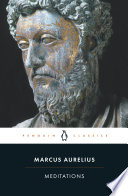
1. Meditationsby Marcus Aurelius
Marcus Aurelius
Marcus Aurelius was the Roman Empire’s emperor from 160 to 180 CE. He governed the empire through the Antonine Plague, the Parthian War, and the Germanic Wars. Aurelius practiced Stoicism, a philosophy focusing on achieving eudaimonia, put simply, a well-lived life. It encourages maximizing positive emotions, reducing negative emotions, and developing virtues.
Aurelius’ musings and reflections were compiled in Meditations. This collection of his private notes, in turn, became one of the most respected philosophy books in the world. His personal writings provide comfort, wisdom, and motivation to readers. At the center of the book is his insight on how to evolve mentally and succeed in life. Aurelius emphasizes the timeless philosophy of goodness over pleasure, tranquility over happiness, and finding inner peace to combat a challenging and turbulent world.
The book urges readers to recognize that suffering is often self-inflicted. Aurelius accepts that everything happens for a reason, but managing one’s expectations helps to alleviate suffering.
“You have power over your mind — not outside events. Realize this, and you will find strength.”
Marcus Aurelius, Meditations
2. The Daily Stoic: 366 Meditations on Wisdom, Perseverance, and the Art of Living by Ryan Holiday and Stephen Hanselman
Ryan Holiday and Stephen Hanselman’s book, The Daily Stoic, highlights Stoic philosophers’ insights across time. The book aims to strengthen meditation routines on wisdom, perseverance, and the art of living. It features new translations of Stoic insights, powerful quotations, and anecdotes presented in diary form with a tip per day from great philosophers like Aurelius, Epictetus, and Seneca.
Through it, you’ll learn how to use the ancient philosophy of Stoicism in your life. It will teach you to redirect your perception and accept what you can’t control. This, in turn, makes it easier to deal with negativity, be more honest with yourself, and find the key to happiness.
“It may take some hard work. But, the more you say no to the things that don’t matter, the more you can say yes to the things that do.”
Stephen Hanselman, The Daily Stoic by Ryan Holiday: 366 Meditations on Wisdom, Perseverance, and the Art of Living
3. A New History of Western Philosophyby Anthony Kenny
Anthony Kenny’s A New History of Western Philosophy is a must-read for anyone interested in Western philosophy as it chronicles the evolution of Western society. The book starts in Ancient Greece, moving through the Middle Ages and progresses to the Age of Enlightenment. Kenny also explores 20th-century philosophy.
Furthermore, his work introduces great Christian thinkers like William of Ockham, the English Franciscan friar, Thomas Aquinas, the Italian Dominican friar, and Augustine of Hippo, also known as Saint Augustine, the theologian, philosopher and bishop of Hippo Regius in Numidia.
Kenny explains common Western philosophy and its effectiveness in dealing with everyday challenges. The author articulates his ideas clearly, providing detailed explanations to support his opinions.
“Philosophy is not a matter of knowledge; it is a matter of understanding, that is to say, of organizing what is known.”
Anthony Kenny, A New History of Western Philosophy
4. Republicby Plato
Whether you’re a politician, student, or a simple citizen, you’ll learn about good governance and how to be a good human through Plato’s The Republic. This book focuses on ethics, politics, and Plato’s ideas of a “perfect republic.” He tells stories about himself and writes about the nature of justice and how he and his men aimed to enforce this justice.
For Plato, justice isn’t mere strength. It’s using strength to do good where everyone benefits.
Another compelling subject Plato discusses in the book is his categorization of governments. He divides them into five regimes, ranking them from best to worst: Aristocracy, Timocracy, Oligarchy, Democracy, and Tyranny.
Interestingly, he put aristocracy first and democracy just above tyranny. Aristocracy might be Plato’s top pick because it’s intellect and wisdom-based. However, many people today will agree that democracy is by far the best system of government.
“The heaviest penalty for declining to rule is to be ruled by someone inferior to yourself.”
Plato, The Republic
5. The Gulag Archipelago: An Experiment in Literary Investigation by Aleksandr Solzhenitsyn, 1918 - 2008 CE
Aleksandr Solzhenitsyn calls The Gulag Archipelago his “main” work
Dissident Aleksandr Solzhenitsyn wrote The Gulag Archipelagobetween 1958 and 1968. GULAG stands for Glavnoye Upravleniye Ispravitelno-Trudovykh Lagerey, the Soviet agency supervising the forced labor camps network set up by Vladimir Lenin. In English, GULAG is translated to “Chief Administration of Corrective Labour Camps.” These camps contained the Soviet Union’s criminal and political prisoners.
Solzhenitsyn’s journalistic investigation led him to create The Gulag Archipelago. Mainly, it’s an account of what Solzhenitsyn experienced during his eleven-year stay in one of the camps. Aside from his encounters, the book includes other inmates’ stories and historical references.
While it’s difficult to read as it contains graphic descriptions of the torture and brutality of the Soviet regime, it’s an eye-opening work to many. It’s one that “[paints] a picture of Soviet Communism that taints its memory forever.”
The Gulag Archipelagois a powerful book that promotes gratitude for all free people. Compared to the dire conditions in a GULAG, many of our problems are temporary. Moreover, the book proves that there’s no benefit that can be derived from exploitation, mass violence, and control.
“It is impossible to expel evil from the world in its entirety, but it is possible to constrict it within each person.”
Aleksandr Solzhenitsyn, The Gulag Archipelago: An Experiment in Literary Investigation
6. Letters From A Stoic by Lucius Annaeus Seneca, 4 BCE - 65 CE
Seneca wrote Letters From A Stoic at the end of his life, during his retirement as Emperor Nero’s chief advisor
Lucius Annaeus Seneca’s Letters From A Stoic is a collection of 124 letters sent to his friend Lucilius, an official in Ancient Rome. This collection, also known asEpistulae Morales ad Lucilium(Moral Letters to Lucilius), delves into the fundamental concepts of ethics, like compassion and unselfishness.
Seneca’s letters also address every generation’s issues, including grief, failure, success, wealth, poverty, and education. As a unique Stoic, Seneca cites and blends ideas learned from other philosophers and imbues them into his practical approach to self-improvement.
Seneca says a wise person doesn’t rely on friends but chooses to have them. The book is easy to read, with an intimate and conversational style. It will make you feel like a friend is writing you daily words of encouragement.
“If you live in harmony with nature, you will never be poor; if you live according to what others think, you will never be rich.”
[Lucius Annaeus Seneca](https://iep.utm.edu/seneca/#:~:text=Lucius%20Annaeus%20Seneca%20(c.,inherited%20from%20his%20Stoic%20predecessors.), Letters from a Stoic
7. The Discourses by Epictetus, 55-135 CE
Most ancient stoic philosophers like Aristotle, Kant and Socrates came from the top of society; however, one of the most important stoics came from the opposite end of the spectrum.
While most ancient philosophers came from the upper class, one of the most important Stoics came from the opposite end of the spectrum. Epictetus was born into poverty as an enslaved person. He only achieved his freedom from his owner, Epaphroditus, when King Nero passed away in 68 CE.
He initially shared his Stoic philosophy in Rome until Emperor Domitian banished all philosophers in his territory. Epictetus then moved to Greece, where he continued teaching, eventually dying around 135 CE.
After gaining his freedom, Epictetus devoted his life to philosophy and taught students through classes. He did not record any of his teachings, but his student, Lucius Flavius Arrianus or Arrian (aka The Second Xenophon), collected and transcribed Epictetus’ lectures. The Discoursesis the expanded version of Epictetus’ discussions.
Epictetus believes that the world is rational, logical, and mathematical, and so are humans. He argues that humans suffer because we fail to understand what we can and cannot control. In The Discourses, readers will learn to be happy with what life offers. Aligning our will to the will of the gods will eliminate almost all stress, anxiety, and problems. The book guides readers to accept hardships and change in favor of growth and evolution.
“Freedom is secured not by the fulfilling of men’s desires, but by the removal of desire.”
Epictetus, The Discourses
8. Tao Te Ching by Lao Tzu, 604-531 BCE
Tao Te Ching strongly influenced other Chinese philosophy schools, religions, and artists
There’s still a debate on whether Lao Tzu (aka Laozi or Lao Tze) was a real person. It will depend on how one views Taoism or Daoism. Taoism teaches that all living things must live in harmony with the universe. In philosophical Taoism, Lao Tzu lived in the sixth century BCE. In religious Taoism, Lao Tzu is a deity.
Because Lao Tzu’s existence is unconfirmed, the book Tao Te Ching, or*The Way and Its Power, *can safely be described as a collection of poetry and sayings from many authors. Still, many believe it’s a work of the Chinese philosopher [Lao Tzu](https://www.encyclopedia.com/people/philosophy-and-religion/philosophy-biographies/lao-tzu#:~:text=Lao%20Tzu%20(active%20604%E2%80%93531,the%20sacred%20book%20of%20Taoism.).
Whether from the great thinker or not, the book became the foundation of Taoism. It guides people towards a moral and spiritual way of life in peace, balance, and harmony with oneself and the world. In Taoism, “going with the flow” means letting your life unfold as it’s meant to be. It’s vital to avoid internal discord and negative consequences. One of the vital lessons from this book is the importance of admitting your faults and mistakes, as they can be your greatest source of strength.
Tao Te Chingis a must-read book for anyone unfamiliar with Eastern philosophy. While Western philosophy focuses on Individualism or the pursuit of autonomy, Eastern philosophy highlights Collectivism or maintaining social harmony.
“When you are content to be simply yourself and don’t compare or compete, everyone will respect you.”
Lao Tzu, Tao Te Ching
9. Man’s Search for Meaning by Viktor Frankl, 1905 - 1997 BCE
Man’s Search for Meaning sold over ten million copies and is one of America’s ten most influential books
Viktor Frankl’s memoir, Man’s Searching For Meaning, is an account of the Austrian psychiatrist’s experiences in Nazi concentration camps during the Second World War. In it, he shares how he was beaten, tortured, and starved in four concentration camps over three years. Unfortunately, his mother and brother did not survive and were executed in the gas chambers. His wife, Tilly, died of typhus while they were separated.
The book’s original title isEin Psycholog erlebt das Konzentrationslager (A Psychologist Experiences the Concentration Camp), published in 1946. Despite his harrowing experiences, Frankl survived by finding a purpose and holding on to the hope of reuniting with his family. He did not give up on life, unlike most of the prisoners in the camps.
He refused to concede and instead increased his chances of survival by networking with the other prisoners and even befriending a guard. Moreover, he willed himself to appreciate the few moments of happiness he could find inside the camps, such as watching the sunset.
In Man’s Search for Meaning, Frankl argues that suffering is inevitable. But there are always ways to cope, find meaning, and move forward. Rather than defining life’s meaning in a one-size-fits-all explanation, he suggests that while circumstances may influence it, one’s actions shape the meaning of life. These ideas birth Frankl’s Theory of Meaning, logotherapy, which focuses on humans’ ability to endure through searching for purpose and looking towards the future.
“Everything can be taken from a man but one thing: the last of the human freedoms—to choose one’s attitude in any given set of circumstances, to choose one’s own way.”
Viktor E. Frankl, Man’s Search for Meaning
10. Atlas Shrugged by Ayn Rand, 1905 - 1982 CE
Ayn Rand’s Atlas Shrugged shaped the worldview of many devotees of liberty.
In 1957, Ayn Rand published her controversial novel Atlas Shrugged. It’s her last and longest book that best represents her philosophy, Objectivism. Objectivism argues that reality exists wholly independent of the mind. There are observable facts, so there is only one correct description of reality — it doesn’t matter if the human mind knows it.
The book follows Dagny Taggart’s efforts to save their railroad company from the “looters” during the US economic depression. This fiction touches on real-world issues like capitalism, government intervention, raw materials and labor shortage, and taxation. Dagny Taggart’s personality is Rand’s way of stressing the importance of having an independent mind.
Reading Atlas Shruggedwill make you realize that having the freedom to think is not only for one’s self-interest. It’s also for society to develop. It may take you a while to read this book, as it has over a thousand pages tackling heavy topics. But it is worth the effort.
“If you don’t know, the thing to do is not to get scared, but to learn.”
Ayn Rand, Atlas Shrugged
11. Critique of Pure Reason by Immanuel Kant, 1724 - 1804 CE
Immanuel Kant published a revised version of the Critique of Pure Reason in 1787
Critique of Pure Reason is Immanuel Kant’s direct response to the Scottish philosopher David Hume’s Empiricist principles. Hume’s Empiricism assumes that knowledge is gained from observation and sensory experience.
In the book*, *Kant strives to reconcile Rationalism and Empiricism to discover the limits of human cognition and reason. Rationalism is a philosophy that prioritizes logic and reason and not emotions or religious beliefs. Kant also discusses the concept of “noumena,” or the philosophy that some things can exist independent of the human sense. The soul, cosmos, and God are some examples.
Critique of Pure Reasonis a challenging read; even Italian philosopher Luciano Floridi said: “I find reading Kant a bit like understanding cricket as a foreigner: hard to get at first, but once you get it, it’s very enjoyable.” Fortunately, this 1781 classic philosophy book is now easier to understand with new and easy-to-read translations.
Moreover, Critique of Pure Reasonis only one of Kant’s critical works. After reading this book, you can also read Critique of Practical Reason and Critique of Judgement*. It’s a good place to start if you’re keen on learning about Kant’s philosophy.
“All our knowledge begins with the senses, proceeds then to the understanding, and ends with reason. There is nothing higher than reason.”
Immanuel Kant, Critique of Pure Reason
12. Beyond Good and Evil: Prelude to a Philosophy of the Future by Friedrich Nietzsche, 1844 - 1900 CE
Beyond Good and Evil, aka Jenseits von Genealogie der Moral, was written in 1886
Friedrich Nietzsche is one of the most controversial philosophers in Western history. His work Beyond Good and Evil is the first book he penned after completing his philosophical fiction,*Thus Spake Zarathustra: A Book for All and None**. The book delves into morality, truth, and power.
In the book, Nietzsche vehemently opposes the views of other philosophers on morality. He argues that morality in European culture is influenced by Christianity and has become an established and accepted code. He states that the acceptance of this code blinds us to other possibilities and stresses the importance of balancing personal aspirations with society’s expectations.
As the German philosopher challenged traditional moral beliefs, he also paved the way for modern ideas. If you read Beyond Good and Evil, remember that you should understand the book as a whole and not judge it based on fragments that could be misinterpreted.
Walter Kaufman, the book’s translator, reminds readers that Nietzche wants people to “shift perspectives, or to perceive hues and gradations instead of simple black and white.”
“The strength of a person’s spirit would then be measured by how much ‘truth’ he could tolerate, or more precisely, to what extent he needs to have it diluted, disguised, sweetened, muted, falsified.”
Friedrich Nietzsche, Beyond Good and Evil: Prelude to a Philosophy of the Future
13. Nausea by Jean-Paul Sartre, 1905 - 1980 CE
Jean-Paul Sartre’s Novel Nausea is a crucial representation of existentialist philosophy.
Jean-Paul Sartre was a philosopher and intellectual who advocated existentialism, a philosophical belief that we are responsible for finding meaning in our own lives.
Satre’s novel Nausea is considered an expression of existentialist philosophy. The novel narrates Antoine Roquentin’s life. He’s a writer suffering from the overwhelming emptiness of his existence. This book is his diary, where he documents his emotions, feelings, and impressions about himself, the world, and the people around him. Roquentin’s daily life and struggles with loneliness, addiction, and human desire make the book relatable.
Nausea was Satre’s first book and is considered his fiction masterpiece. His essay, Being and Nothingness, is available in paperback and hardback form and is known as ‘the Bible of existentialism,’ promoting free thinking, responsibility, and action. It also features later in our list! (No. 17)
“I am alone in the midst of these happy, reasonable voices. All these creatures spend their time explaining, realizing happily that they agree with each other. In Heaven’s name, why is it so important to think the same things all together.”
Jean-Paul Sartre, Nausea
14. The Nicomachean Ethics by Aristotle, 384 - 322 BCE
Aristotle’s The Nicomachean Ethics explains the close relationship between ethical inquiry and politics
Aristotle’s renowned work The Nicomachean Ethics tackles crucial topics to achieve man’s ultimate goal — eudaimonia (self-actualization). It’s a compilation of ten books on the ethics of life.
To get to this state, Aristotle says we must break free from our mind prison, which is living a mundane life. Aristotle believes true and pure happiness comes from finding purpose, realizing potential, and improving oneself. He argues that happiness results from what we do and how we live. Achieving eudaimonia is a lifetime pursuit.
Written around 350 BC, Aristotle’s The Nicomachean Ethicsis one of the significant works of moral philosophy in the Western tradition. His book contains the moral ideas that form the basis of almost all Western civilization. As a reader,* The Nicomachean Ethics *will teach indispensable lessons that’ll help you declutter your thoughts and continually lead you to be a better version of yourself.
“One swallow does not make a summer, neither does one fine day; similarly one day or brief time of happiness does not make a person entirely happy.”
**Aristotle**, The Nicomachean Ethics
15. The Stranger by Albert Camus, 1913 - 1960 CE
Albert Camus’ The Stranger or L’Étranger is a philosophical novel set in Algeria after WWII
Camus was a renowned French philosopher, although he denies the title himself, stating he did “not believe sufficiently in reason to believe in a system.” His philosophical theory of Absurdism is based on the paradox that human beings cannot help but ask the question, “Why do I exist?” but are unable to access an answer by any means.
Camus rejects all scientific, teleological, metaphysical, or human-created answers. As such, he concludes the universe is irrational, and human life is meaningless.
The Strangeris a classic philosophical novel hailed by the Paris newspaper Le Monde as #1 in the 100 Books of the Century. Nobel Prize winner Albert Camus penned the tale of Meursault to showcase Absurdism.
Meursault is an indifferent man who’s detached from life. He doesn’t even weep when his mother dies, nor does he show any emotion when he is sent to the guillotine after “murdering” an Arab on the beach. Through the book, Camus demonstrates that life is absurd and rarely makes sense. The book was turned into a 1967 movie, The Stranger.
“I had been right, I was still right, I was always right. I had lived my life one way, and I could just as well have lived it another. I had done this, and I hadn’t done that. I hadn’t done this thing, but I had done another. And so?”
Albert Camus, The Stranger
16. The Analects by Confucius, 551 - 479 BCE
The Analects is one of China’s most significant and widespread Confucian books. It contains Confucian teachings on leading a virtuous life. Although these passages were recorded long ago, they are still applicable and relevant today. Confucius’ book influenced the thinking, customs, and moral systems of China and its neighboring countries.
Through it, Confucius shares valuable insights into effective governance, the optimal organization of society, the individual’s role in the state, and the importance of personal integrity.
He suggests that a nation’s development depends on its people’s morals, starting with its leaders. It also highlights ethical values, encouraging people to act and speak honestly.
Read Confucius’s teachings if you’re looking for inspiration and wisdom that has withstood thousands of years.
“The man who moves a mountain begins by carrying away small stones.”
Confucius, The Analects
17. Being and Nothingness: An Essay on Phenomenological Ontology by Jean-Paul Sartre 1905 - 1980 CE
Jean-Paul Sartre’s Being and Nothingnessis one of the most crucial philosophical works of the 20th century. In this book, Sartre aims to reconcile Existentialism with Phenomenology.
Existentialism is the philosophical belief that people are responsible for finding meaning in their lives. Phenomenology is a philosophy of subjective experience.
The book explores the significance of life, free will, and human consciousness. Satre argues that we create our own values, and our existence is characterized by freedom and the inevitability of choice.
According to Sartre, failing to make a decision means you have already created an implicit choice — which he calls “bad faith.” If you’re interested in learning about free will and human consciousness, this philosophy book dedicated to the study of living consciousness is an excellent read.
“It is therefore senseless to think of complaining since nothing foreign has decided what we feel, what we live, or what we are.”
Jean-Paul Sartre, Being and Nothingness: An Essay on Phenomenological Ontology
18. At the Existentialist Café: Freedom, Being, and Apricot Cocktails by Sarah Bakewell, 1963 -
Sarah Bakewell’s At the Existentialist Cafe is among the 2016 New York Times 10 Best Books of the Year
Aside from being a renowned historical biographer, Sarah Bakewell is also great at breaking down complex concepts into digestible explanations. Her 2016 book, At the Existentialist Café, dives into the history of 20th-century Existentialism. She also re-examines the philosophical belief with wit and humor.
It tells the story of friends meeting over apricot cocktails at Bec-de-Gas bar. These are philosophers Jean-Paul Sartre, Simone de Beauvoir, and Raymond Aron, who raved about phenomenology. Aron says, “If you are a phenomenologist, you can talk about this cocktail and make philosophy out of it!”
This phrase kickstarts a movement based around radical freedom, authentic being, and political activism. Bakewell’s writing will make you feel as if you’re at that same cafe, discussing with philosophers who will make waves for years to come. Moreover, she spotlights that ideas are absorbing, but understanding people who propose the ideas is more interesting.
“Few people will risk their life for such a small thing as raising an arm — yet that is how one’s powers of resistance are eroded away, and eventually one’s responsibility and integrity go with them.”
Sarah Bakewell, At the Existentialist Café: Freedom, Being, and Apricot Cocktails
19. The Prince by Niccolò Machiavelli, 1469 - 1527
The Prince was published after Machiavelli’s death in 1532, and its first English translation came a century later
Niccolo Machiavelli’s The Prince is an excellent read if you are interested in political philosophy books with themes like warcraft, free will, statesmanship, and hatred. In the 16th century, Machiavelli wrote a detailed how-to guide to be an effective leader and maintain political power based on real-world experience. The “prince”*in Machiavelli’s book is unlike those in fairytales or other philosophers’ descriptions of what makes a leader suitable. Instead, Machiavelli observes them as calculating, brutal, and immoral if necessary.
Machiavelli’s book caused outrage because it justified doing criminal acts to protect or gain territories. It was placed in the Catholic church’s “Index of Prohibited Books” in 1559. Even the Protestant Church in Elizabethan England banned it.
Machiavelli believes successful leaders should not rely on luck but instead use their charisma, intelligence, and power to shape their destinies. He uses easy-to-understand language so readers can quickly grasp his messages.
Despite sparking controversies and damaging his reputation, Machiavelli’s analysis of politics based on experience, as opposed to religious or moral instructions, established him as a revolutionary political thinker. Today, he’s often considered the founder of modern political science.
“Everyone sees what you appear to be; few experience what you really are.”
Niccolo Machiavelli, The Prince
20. The Art of Living: Peace and Freedom in the Here and Now by Thich Nhat Hanh, 1926 - 2022
The Art of Living is based on Thich Nhat Hanh’s last full talks prior to his sudden hospitalization
Zen Master Thich Nhat Hanh believes that one can find answers to life’s toughest questions by living mindfully. Living a happy, peaceful, and active life frees us from negativity. When we do so, we can face aging and death without fear.
The Art of Living features seven transformative meditations that open new perspectives in people’s lives, relationships, and connections to the world. Thich Nhat Hanh was also a peace activist who wasn’t afraid of sharing his personal stories and mistakes with the world. He directed others to live a more present, satisfying life. Moreover, the book teaches us the importance of looking inside ourselves and developing compassion before anything else.
“Your dream can be realized right in the present moment. You live your life in such a way that every step in the right direction and every breath along the way becomes the realization of your dream. Your dream does not take you away from the present; on the contrary, your dream becomes reality in the present moment.”
Thich Nhat Hanh, The Art of Living: Peace and Freedom in the Here and Now
21. The Meaning of Life: A Very Short Introduction by Terry Eagleton, 1943 -
Terry Eagleton’s The Meaning of Life demonstrates that everyone has their definitions of “the meaning of life.”
Terry Eagleton’s The Meaning of Life demonstrates how extraordinary minds like Shakespeare and Sartre defined the phrase “the meaning of life.” In reading the book, you’ll notice that everyone has different explanations and understanding of what life means. Exposing yourself to these various definitions gives you a better grip on howyourlife should be lived.
Eagleton suggests that the question about “the meaning of life” has only been problematic in modern times. Many people turn to social media and other forms of escape instead of tackling it head-on. He argues that the meaning of life isn’t a solution to a problem but rather a particular way of living. If you struggle to find your life purpose, give this thought-provoking book a shot.
“It is conceivable that not knowing the meaning of life is part of the meaning of life, rather as not counting how many words I am uttering when I give an after-dinner speech helps me to give an after-dinner speech. Perhaps life is kept going by our ignorance of its fundamental meaning, as capitalism for Karl Marx.”
Terry Eagleton, The Meaning of Life
22. A Guide to the Good Life: The Ancient Art of Stoic Joy by William B. Irvine
William Irvine is a professor of philosophy at Wright State University in Ohio. He has written several books and essays on philosophy and the practice of Stoicism. His book, A Guide to the Good Life, encourages readers to live a good life by introducing them to Stoic philosophy. He draws from the writings of other philosophers, such as Seneca and Marcus Aurelius, and relates many of their teachings and techniques to the modern world.
Irvine’s book provides a helpful guide for those who want to avoid negative emotions such as chronic dissatisfaction. He also incorporates his own experiences and offers practical first-hand advice. The book covers Stoicism’s vital concepts and comments on how its popularity has waned at certain times. Overall, Irvine demonstrates the continued relevance of Stoicism today.
This book is designed to help readers live a peaceful life, but it mainly aims to show how to become a thoughtful observer. Irvine suggests that by observing yourself and meditating daily, you can better identify the sources of anxiety and ultimately prevent it. Moreover, this book is an excellent complement to a course on Stoicism on the Waking Up app, which provides an insightful introduction to many of the topics covered in the philosophy books mentioned in this post.
“If you consider yourself a victim, you are not going to have a good life; if, however, you refuse to think of yourself as a victim — if you refuse to let your inner self be conquered by your external circumstances — you are likely to have a good life, no matter what turn your external circumstances take.”
William B. Irvine, A Guide to the Good Life: The Ancient Art of Stoic Joy
23. The Art of War by Sun Tzu, 544 - 496 BCE
Sun Tzu’s teachings in The Art of War are the basis for many Asian martial arts philosophies
The Chinese general and strategist Sun Tzu produced The Art of War sometime in the fifth century BCE. This famous Chinese military strategy and warfare treatise is a classic book still relevant today for anyone interested in leadership, conflict, and teamwork. Sun Tzu’s book is engaging and practical, offering an action-oriented approach to philosophy.
It’s a book about war, but today, it can be applied to our personal wars or conflicts, such as our careers, businesses, and lives. Sun Tzu’s tactics can be used as metaphors.
Another key takeaway from the book is that you should only enter battles you can win. You should also lead your team like you would lead a single person by the hand. If you want to understand the book better, there are The Art of Wareditions with commentaries and expert explanations.
“If you know the enemy and know yourself, you need not fear the result of a hundred battles. If you know yourself but not the enemy, for every victory gained you will also suffer a defeat. If you know neither the enemy nor yourself, you will succumb in every battle.”
Sun Tzu, The Art of War
24. Meditations on First Philosophy by René Descartes, 1596 - 1650
Descartes tackles his Cartesian theory in Meditations on First Philosophy
French philosopher and mathematician René Descartes aims to explain the importance of God’s existence and the distinction between the human body and soul. His book Meditations on First Philosophy is a journalistic six-day course of meditation. If you’re interested in how the great French philosopher prioritized certainty over belief and doubt, this is the book you’re looking for.
Many also call Descartes the “Father of Modern Philosophy” for breaking away from his time’s prevalent logic system. The book is one of Descartes’ most influential works, becoming a philosophical classic and the basis of modern skepticism.
“For the very fact that my knowledge is increasing little by little is the most certain argument for its imperfection.”
René Descartes, Meditations on the First Philosophy
25. Sophie’s World: A Novel About the History of Philosophy by Jostein Gaarder, 1952 -
Sophie’s World is a fantasy philosophical history novel set in 1990s Norway
If you’re new to philosophy and searching for a light and entertaining book, Sophie’s World by Jostein Gaardar should be on your list. It’s a mystery novel centering around 14-year-old Sophie and Alberto Knox, her tutor adept in philosophy.
Through their correspondence, Sophie learns the history of philosophy; however, the plot thickens when she receives letters addressed to “Hilde.” As the story unfolds, Sophie tries to answer the two questions posed to her, “Who are you?” and “Where does the world come from?”
Gaarder’s book became an international bestseller, with over 50 million copies sold and translated into 64 languages. It’s a great introductory book to the history of philosophy for all ages.
“Wisest is she who knows she does not know.”
Jostein Gaarder, Sophie’s World: A Novel About the History of Philosophy
26. A Treatise of Human Nature by David Hume, 1711 - 1776
A Treatise of Human Nature consists of three books: Of the Understanding, Of the Passions, and Of Morals
David Hume’s 1739 book, A Treatise of Human Nature, explores human nature empirically. His observations contributed to shaping our understanding and valuation of morality and justice. In the book, Hume points out that no universal moral code or intrinsic value is beyond our comprehension. Using Hume’s theories can help you analyze your core beliefs and consider alternative perspectives with an open mind.
This treatise consists of three books: *Of the Understanding, Of the Passions,*and Of Morals. Hume influenced other philosophers, such as Immanuel Kant’s theoretical philosophy.
“Reason is, and ought only to be the slave of the passions, and can never pretend to any other office than to serve and obey them.”
David Hume, A Treatise of Human Nature
27. On the Shortness of Life: Life Is Long if You Know How to Use It by Lucius Annaeus Seneca, 4 BCE - 65 CE
Seneca wrote On the Shortness of Life over 2000 years ago
On the Shortness of Life*is a record of Lucius Annaeus Seneca’s Stoic writing. Seneca was an Ancient Rome philosopher, playwright, and tutor of the Roman emperor Nero.
His insights help those who feel their lives lack purpose. Seneca argued that while people have enough time to live, they must use it properly and not waste any to ensure fulfillment. The author reminds us that if a person focuses on pursuing leisure, luxury, and legacy, it may lead to a shorter lifespan.
“You act like mortals in all that you fear, and like immortals in all that you desire”
Lucius Annaeus Seneca, On the Shortness of Life: Life Is Long if You Know How to Use It
28. Confessions by Saint Augustine, 354 - 430
Saint Augustine wrote Confessions when he was 43
Saint Augustine’s Confessions is an original memoir that has influenced Christian writers and readers for 1000 years. It’s a documentation of Saint Agustine’s life and thoughts that blend theology, philosophy, and interpretations of the Christian bible. His account is primarily about his conversion to Christianity, with the memoir serving as a guide for readers on the same path.
In the book, the word “confession” is used in several ways, including admitting one’s sins, a statement of belief, and praise. At its core, Confessionsaims to assist readers to rediscover and love God more.
“The happy life is this - to rejoice to thee, in thee, and for thee.”
Saint Augustine, Confessions
29. Ethics Demonstrated in a Geometrical Manner by Benedict de Spinoza, 1632 - 1677
Ethics by Benedict de Spinoza was initially written in Latin
Benedict (Baruch) de Spinoza wrote Ethics*in the 1660s. However, it was only published in 1677, a few months after his death, along with his other finished and uncompleted works. Spinoza’s work offers a guide to leading an ethical life, providing definitions of the nature of God, the human mind, our emotions, and a speculation of our place in the natural order of things.
The book is not an easy read, with technical terms that can confuse new philosophy readers. However, Ethicsremains one of the most influential Western philosophy books for a reason. Aside from its rational arguments about morals, free will, God, and the universe, it also explains a means to achieve liberation and happiness.
“Everything excellent is as difficult as it is rare.”
Benedict de Spinoza, Ethics Demonstrated in a Geometrical Manner
30. A History of Western Philosophy by Bertrand Russell, 1872 - 1970
Bertrand Russell’s A History of Western Philosophy was first published in 1945
Lord Bertrand Russell’s A History of Western Philosophy covers notable philosophers from all eras, including Plato, Leibniz, and many more. This book demonstrates how philosophy progressed over time, from Early Greek Philosophy to the early 20th century. The British philosopher’s book has three sections (Ancient, Catholic, and Modern Philosophy) and 76 chapters.
To better understand the thinker’s perspectives, Russell added factors that might have affected their thinking. Such include the philosophers’ lives and social surroundings. It’s cited as one of the books that garnered Russell the 1950 Nobel Prize for Literature.
“The search for something permanent is one of the deepest of the instincts leading men to philosophy.”
Bertrand Russell, A History of Western Philosophy
31. The Gay Science: With a Prelude in Rhymes and an Appendix of Songs by Friedrich Nietzsche, 1844 - 1900 CE
Nietzsche’s title, The Gay Science, combines troubadour songs and the art of making poetry
Freidrich Nietzsche’s The Gay Science comprises five interconnected books of over 300 aphorisms (brief expressions of general principle or truth). Each aphorism aids in examining how humans comprehend and interpret life through science and religion. Nietzsche’s most shocking claim is that “God is dead,” where he reasons that Christianity no longer has the power it once had on how people view “truths.”
In the book, Nietzsche introduces “amor fati,” or love of fate. He discourages people from fearing the repetition of events or hoping that things happen how they want to. Instead, he urges others to embrace life’s beauty and complexity by accepting everything, whether good or bad.
“Send your ships into uncharted seas! Live at war with your peers and yourselves! Be robbers and conquerors as long as you cannot be rulers and possessors, you seekers of knowledge! Soon the age will be past when you could be content to live hidden in forests like shy deer!”
Friedrich Nietzsche, The Gay Science: With a Prelude in Rhymes and an Appendix of Songs
32. The Story of Philosophy: The Lives and Opinions of the World’s Greatest Philosophers by Will Durant, 1885 - 1981 CE
Durant’s historian wife helped him compile The Story of Philosophy in just over 500 pages
Readers who want to focus on Western Philosophy and its development should check out Will Durant’s The Story of Philosophy. It depicts the lives of great Western philosophers, including their ideas on life’s meaning, religion, ethics, and politics. Aside from showing how each philosopher’s thoughts were born, he demonstrates how each thinker’s perspective influenced another.
The book sold over two million copies and entered the New York Timesbestseller list. In 1975, the*New York Times *called Mr. and Mrs. Durant “the greatest historians of our time.”
“Science is organized knowledge. Wisdom is organized life.”
Will Durant, The Story of Philosophy: The Lives and Opinions of the World’s Greatest Philosophers
33. The Obstacle Is the Way: The Timeless Art of Turning Trials into Triumph by Ryan Holiday, 1987 -
The Obstacle Is the Way has 224 pages, a short read compared to most philosophy books
Ryan Holiday’s The Obstacle Is the Way explains how a person’s perception, will, and action can turn obstacles into success. It’s a book that helps readers face hurdles with composure.
Holiday shares how to successfully conquer challenges and embrace and grow from them through Stoicism. This Goodreads choice is only one of Holiday’s works that promotes Stoicism and is a part of a trilogy — Ego Is the Enemyand*Stillness Is the Key**.
“We forget: In life, it doesn’t matter what happens to you or where you came from. It matters what you do with what happens and what you’ve been given.”
Ryan Holiday, The Obstacle Is the Way: The Timeless Art of Turning Trials into Triumph
34. The Book of Joy: Lasting Happiness in a Changing World by Dalai Lama XIV and Desmond Tutu
_Two _Nobel Prizespiritual masters collaborate to share their wisdom in The Book of Joy
After meeting in Dharamsala, India, the Dalai Lama and Archbishop Desmond Tutu created The Book of Joy, a book about living with joy despite suffering. For these spiritual leaders, handling suffering well is an essential life skill one must acquire. These leaders share their stories and practices to help readers explore the nature of true joy and confront the obstacles that everyone experiences.
They discuss how to practice effective responses like transforming sadness and depression into a compassionate, humorous, and enduring way of life. The book has been translated into 40 languages, sold over a million copies, and was an immediate New York Timesbestseller.
“The more time you spend thinking about yourself, the more suffering you will experience.”
Dalai Lama XIV and Desmond Tutu, The Book of Joy: Lasting Happiness in a Changing World
35. Everything Is F*Cked: A Book About Hope by Mark Manson, 1984 -
Mark Manson’s argument for Everything Is F*Cked is that the world is fine, but humans creates problems
Mark Marson published Everything Is FCked*in 2019 to explain how hope can be beneficial or detrimental to one’s life. Set in the modern world with technology and social media, this is one of the most timely books to which every reader can relate. Marson connects essential topics like religion, politics, technology, and money to great philosophers’ minds in the book. His witty, humorous, and entertaining narrative makes thisNew York Times *bestseller a joy to read.
“Living well does not mean avoiding suffering; it means suffering for the right reasons.”
Mark Manson, Everything is Fcked: A Book About Hope*
36. Reasons and Persons by Derek Parfit, 1942 - 2017 CE
Derek released his debut book, Reasons and Persons, in 1984
Derek Parfit specialized in identity, morality, and ethics. His work Reasons and Persons is broken into four parts. Part one discusses existing theories on morality and ratonality and their effectiveness. The second part considers the wants of the many versus the wants of the few. (Something for the Trekkies.) Part three focuses on personal identity, and part four considers our obligations to future generations.
In this book, Parfit makes a strong case for an objective approach to how a person should live. Reasons and Personsranked #1 inAmazon bestsellers in metaphysics.
“We ought not to do to our future selves what it would be wrong to do to other people.”
Derek Parfit, Reasons and Persons
37. The Second Sex by Simone de Beauvoir, 1908 - 1986 CE
The central conflict in Simone de Beauvoir’s The Second Sex is men and women struggling for societal importance
Simone de Beauvoir is the author of the most significant philosophical book of feminist literature. The Second Sex argues that societal structures and norms have resulted in women being demoted to domestic and maternal roles. The central ideas of de Beauvoir’s book are inequality, mythical representations of women, adult women’s inhabits, justifications, and otherness.
Additionally, de Beauvoir aims to prove through her book that women aren’t inherently feminine but shaped by various external processes. For readers intrigued by feminist philosophy, social constructions, and gender roles, The Second Sexis an excellent foundational book.
“…her wings are cut and then she is blamed for not knowing how to fly.”
Simone de Beauvoir, The Second Sex
38. The Social Contract by Jean-Jacques Rousseau, 1712 - 1778 CE
The Social Contract was initially published in 1762
In The Social Contract, Jean-Jacques Rousseau argues that ancient people were considered freemen, but in reality, they were merely subject to societal law. They willingly surrendered their freedom in exchange for protection. So, Rousseau proposes to replace the existing system with a new one. A political system where people can give or take away power from rulers that don’t govern their place for the good of their people.
This proposal influenced the basis of the modern-day democracy that promotes liberty, justice, and equality. The Social Contractis a must-read for anyone who wants to understand humanity’s past relationship with the government.
“To renounce liberty is to renounce being a man, to surrender the rights of humanity and even its duties.”
Jean-Jacques Rousseau, The Social Contract
Why Should I Read Philosophy Books?
From a distance, philosophy may seem like a bunch of mumbo jumbo. Before I started religiously reading philosophy books, I considered the topic irrelevant, boring and weird. But after further inspection, I realized philosophy offers the answers to many modern-day problems.
Tinkers, writers and philosophers from times past wrestled with many problems, experiencing a fear of death. Ancient Greek philosophers wrote down their problems and found solutions. Why not learn from other people’s successes and failures and how they overcame or accepted their problems?
If you don’t know which philosophers to follow, start with:
Michel de Montaigne
Martin Heidegger
Georg Wilhelm Friedrich Hegel
Unlike other philosophers, these three write in a way that’s easy to understand. You aren’t bombarded with big words and hard-to-understand philosophy, which is perfect when starting out.