If you want to expand your literary horizons, take a look at a list of the best Egyptian authors and writers of all time.
Egypt’s powerful culture goes back thousands of years. There are numerous writers throughout the Arabic world, including Cairo and Alexandria, who have produced a wide variety of short stories, novels, and works of fiction that have had a tremendous impact on literature to this day. From Nobel Prize winner Naguib Mahfouz to fiery activist Nawal El Saadawi, Egyptian writers have produced some of the most important works in the Arabic literary tradition.
For more recommendations, you might also enjoy exploring best Moroccan authors, best Ethiopian authors, or best South African authors.
Table of Contents
Open Table of Contents
- Must-Read Egyptian Authors Today
- 1. Ahdaf Soueif, Born 1950
- 2. Nawal El Saadawi, 1931 - 2021
- 3. Yusuf Idris, 1927 - 1991
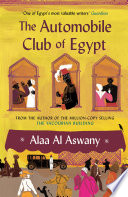
- 4. Alaa Al Aswany, Born 1957
- 5. Miral Al-Tahawy, Born 1968
- 6. Salwa Bakr, Born 1949
- 7. Taha Hussein, 1889 - 1973
- 8. Tawfiq Al-Hakim, 1898 - 1987
- 9. Naguib Mahfouz, 1911 - 2006
- FAQs About the Best Egyptian Authors
- Final Word on the Best Egyptian Authors
Must-Read Egyptian Authors Today
1. Ahdaf Soueif, Born 1950
Ahdaf Soueif is one of the most popular modern Egyptian writers. A prolific novelist and political campaigner, Soueif has become a force as an author and an activist. She was one of the leaders of the Arab Spring protests, which led to the resignation of Hosni Mubarak. Before this, she was a critically acclaimed novelist. Her most famous work is titled The Map of Love.
The Map of Love was shortlisted for the Man Booker Prize in 1999 and weaves together two love stories set a century apart — one between an English woman and an Egyptian nationalist in 1900, and another between their descendants in the present day. Soueif writes with equal fluency in both English and Arabic, giving her a rare ability to bridge Western and Middle Eastern literary traditions. She also founded the Palestine Festival of Literature, which brings international writers to the Palestinian territories.
2. Nawal El Saadawi, 1931 - 2021
Nawal El Saadawi was one of Egypt’s most fearless writers. During the course of her prolific career, she wrote on a wide variety of topics. She was also a physician, psychiatrist, and activist. She was one of the most powerful leaders who advocated for the rights of women not only in Egypt but also throughout the Arab world.
Many of her books focus on the subject of women, with two of her most popular works being Memoirs from the Women’s Prison and The Fall of the Imam. Her writing was so politically charged that she was imprisoned under Anwar Sadat’s regime in 1981, and she wrote her memoir Memoirs from the Women’s Prison on a roll of toilet paper using an eyebrow pencil. Her courage in confronting patriarchal structures within Egyptian society and the wider Arab world made her an icon for feminist movements across the Middle East.
3. Yusuf Idris, 1927 - 1991
Yusuf Idris is one of the most popular Egyptian writers of all time. During the course of his prolific career, he wrote novels, plays, and a remarkable body of short stories. Similar to numerous other Egyptian authors, he did not train to be a writer when he was younger. Instead, he actually trained to be a doctor during his time at the University of Cairo. Eventually, he decided that his life would be better served in the world of literature.
Even though he has a number of marquee works, his most popular work is titled Al-Farafeer. This is a play that focuses on two characters who are completely different from each other. He was nominated for the Nobel Prize for Literature several times, and he won the Naguib Mahfouz Medal for his book City of Love and Ashes. Idris is often considered the master of the Arabic short story, and his influence on the form is comparable to Chekhov’s influence on the European short story tradition.
4. Alaa Al Aswany, Born 1957
Alaa Al Aswany is a prolific Egyptian writer. Originally from Cairo, he is the founding member of a political movement called Kefaya. Through his work and ideas, he speaks to drive changes that take place in Egypt for the benefit of everyone who lives there, including middle-class families.
Two of his most popular works include Chicago and The Yacoubian Building. The latter became a massive international bestseller and was adapted into both a film and a television series — the most expensive Arabic-language TV production at the time. The novel uses a single downtown Cairo apartment building as a microcosm for Egyptian society, exploring class tension, corruption, sexual politics, and religious extremism through the stories of its diverse residents. His work is well-respected for his powerful use of imagery and his unflinching examination of modern Egyptian life.
5. Miral Al-Tahawy, Born 1968
Miral Al-Tahawy is a popular novelist and short-story writer from Egypt. Even though she comes from a conservative Bedouin background, many of her ideas are revolutionary. Her unique thoughts are reflected in her powerful works, and she is widely seen as a pioneer in the world of Arabic literature.
She is a recipient of the Naguib Mahfouz Medal for Literature. Some of her most popular works include The Tent, Blue Aubergine, and Brooklyn Heights, which takes place in New York. Al-Tahawy’s writing draws heavily on her Bedouin heritage, exploring how traditional desert culture intersects with — and often conflicts with — urban modernity. Her prose style is lyrical and richly imagistic, creating vivid portraits of women navigating between old and new worlds.
6. Salwa Bakr, Born 1949
Salwa Bakr is an Egyptian novelist, critic, and activist. She was born in Cairo in 1949 to a father who was a railway worker. She went on to study business at Ain Shams University, graduating in 1972. While she thought about going into the business world, she decided that her talents would be better served as a writer.
She has become one of the most popular Egyptian writers of all time, with some of her most popular books including The Man from Bashmour and The Golden Chariot. Bakr is particularly known for giving voice to marginalized women in Egyptian society — her characters include female prisoners, working-class women, and those pushed to the edges of a patriarchal social order. The Golden Chariot is set entirely within a women’s prison and uses the inmates’ stories to construct a powerful critique of Egyptian society.
7. Taha Hussein, 1889 - 1973
Taha Hussein is considered to be one of the most influential writers of the 20th century. He has also been called the Dean of Arabic Literature. In many ways, he led a Renaissance movement in Arabic literature, and his work contributed to the modernist movement of the entire genre.
Growing up, he studied literature at Al-Azhar University. He spent most of his life living without sight after a botched medical procedure as a child. Despite this, he is still one of the most well-respected Egyptian writers of all time. His autobiography, The Days, is considered a masterpiece of Arabic prose and chronicles his journey from a blind boy in a rural Egyptian village to one of the most important intellectuals in the Arab world. One of his other most popular works is The Call of the Curlew.
8. Tawfiq Al-Hakim, 1898 - 1987
Tawfiq Al-Hakim is an Egyptian writer who is originally from Alexandria. He is widely considered to be one of the pioneers of modern Arabic literature, and his work continues to be studied to this day. He is also widely considered to be the father of Arabic theater. In 1956, he published a play called Death Song that positioned him among the greats in the Arabic world.
Al-Hakim spent several years studying in Paris, where European theatrical traditions — particularly the works of Ibsen and Pirandello — deeply influenced his approach to drama. He brought these influences back to Egypt and fused them with Arabic storytelling traditions, essentially creating a new form of Arabic intellectual theater. Some of his other popular works include Leaving Paradise, The People of the Cave, and A Bullet in the Heart.
9. Naguib Mahfouz, 1911 - 2006
Naguib Mahfouz is widely regarded as the most important Egyptian writer of the 20th century. He won the Nobel Prize for Literature in 1988 — the first Arabic-language writer to receive the honor. His career spanned more than 70 years, during which he wrote several plays, hundreds of short stories, and over 30 novels. During the latter part of his career, he also wrote scripts for movies.
His masterpiece is the Cairo Trilogy — Palace Walk, Palace of Sugar, and Sugar Street — which follows three generations of a Cairo family from World War I through the 1952 Egyptian revolution. The trilogy is often compared to the great family sagas of world literature and is considered one of the finest achievements in the Arabic novel. Other popular works include Love In The Rain, Heart of the Night, and Cairo Modern.
Mahfouz’s writing style evolved dramatically over his career, moving from historical fiction in the 1930s and 1940s to social realism in the 1950s and finally to more experimental, allegorical fiction in his later years. His novel Children of Gebelawi was banned in Egypt for its allegorical treatment of religious prophets. Despite the controversies his work sometimes generated, Mahfouz continued writing until his death in 2006, leaving behind one of the most important bodies of work in world literature.
FAQs About the Best Egyptian Authors
Who is the most famous Egyptian author?
Naguib Mahfouz is the most famous Egyptian author internationally, largely due to his Nobel Prize in Literature in 1988. Within Egypt and the Arabic-speaking world, Taha Hussein — known as the “Dean of Arabic Literature” — holds a similarly towering reputation for his role in modernizing Arabic prose. Both authors are essential reading for anyone interested in Egyptian literature.
Are Egyptian books available in English translation?
Yes, many major Egyptian works have been translated into English. Naguib Mahfouz’s novels are widely available from Anchor Books and Doubleday. Ahdaf Soueif writes directly in English, making her work immediately accessible. The American University in Cairo Press is an excellent publisher to explore for Egyptian literature in English translation.
What themes are common in Egyptian literature?
Egyptian literature frequently explores themes of social class and inequality, the tension between tradition and modernity, political repression and activism, gender roles in Arab society, and the experience of living in Cairo — one of the world’s great cities. Many Egyptian writers also grapple with questions of religious identity and the role of Islam in public life.
What is the best Egyptian novel to start with?
For newcomers to Egyptian literature, Naguib Mahfouz’s Palace Walk (the first book of the Cairo Trilogy) is an excellent starting point. It’s a richly detailed family story that also serves as a window into early 20th-century Egyptian society. For something more contemporary, Alaa Al Aswany’s The Yacoubian Building offers a vivid portrait of modern Cairo through the stories of various residents of a single apartment building.
Final Word on the Best Egyptian Authors
Egyptian literature is one of the richest and most influential traditions in the Arabic-speaking world. From Naguib Mahfouz’s Nobel-winning novels to Nawal El Saadawi’s fearless feminist writing, Egyptian authors have consistently produced works that challenge, illuminate, and inspire. Whether you are drawn to the sprawling family sagas of the Cairo Trilogy or the political urgency of Ahdaf Soueif’s fiction, there is much to discover here. For more literature from the region, explore our guides to the best Moroccan authors, best Ethiopian authors, and best South African authors.