
Argentina produces some of Latin America’s most influential literary works, with writers whose innovations in magical realism, experimental fiction, and political commentary have shaped world literature. Literary experts consistently rank Argentine literature among the most significant contributions to Spanish and English-speaking literary traditions, from groundbreaking short stories to visionary science fiction.
The first Argentine novel appeared shortly after the country gained independence from Spain in the mid-1800s. Since then, Argentine literature has evolved into a distinctive tradition characterized by philosophical depth, political engagement, and technical innovation. Like other Latin American literary movements, Argentine writing embraced magical realism—that seamless blending of fantasy and reality that allows readers to experience worlds where the impossible becomes natural.
These fifteen authors represent Argentina’s literary excellence across generations, from the metaphysical labyrinths of Jorge Luis Borges to contemporary voices documenting twenty-first-century realities. Their works demonstrate how Argentine writers have consistently pushed literary boundaries while addressing universal questions about identity, reality, and human consciousness.
For more international literature, explore our guides to best Czech authors, best Ukrainian authors, and famous Black authors.
15 Essential Argentine Authors
1. Jorge Luis Borges (1899-1986)
Borges stands as Argentina’s most internationally celebrated writer, a short story writer, essayist, poet, and translator whose work fundamentally altered how literature explores reality, time, and consciousness. Born in Buenos Aires during post-revolutionary Argentina’s transformation, Borges created a body of work that influenced generations of writers worldwide.
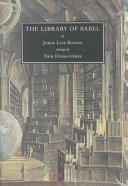
His collections “Ficciones” and “El Aleph” established the template for philosophical fiction, using detective story frameworks to explore metaphysical questions about infinity, identity, and the nature of reality. Stories like “The Library of Babel,” “The Garden of Forking Paths,” and “Pierre Menard, Author of the Quixote” combine erudition with imagination, creating fiction that functions simultaneously as entertainment and philosophical inquiry.
Borges’ technique of magical realism transformed how literature could represent impossible scenarios—labyrinths, infinite libraries, circular ruins—making fantastical premises feel logical through meticulous detail and philosophical rigor. His influence extends beyond literature into philosophy, mathematics, and computer science, with scholars finding in his stories prescient explorations of concepts like hypertext, virtual reality, and infinite databases.
2. Julio Cortázar (1914-1984)
Cortázar became central to the Latin American Boom, that mid-twentieth-century explosion of innovative Spanish-language fiction that achieved worldwide recognition. Born in Brussels to Argentine parents, he spent much of his life in Paris while remaining deeply engaged with Latin American politics and culture.
His experimental novel “Hopscotch” (1963) revolutionized narrative structure by offering readers multiple reading orders, with chapters that could be read sequentially or by following the author’s suggested “hopscotch” pattern. This innovation challenged assumptions about linear narrative while exploring themes of alienation, authenticity, and the search for meaning in modern life.
Cortázar’s short stories including “Blow-Up” (adapted by Michelangelo Antonioni) and “House Taken Over” demonstrate his mastery of subtle horror and psychological unease. His political activism supporting Cuban revolution and Sandinista movement showed how Latin American writers combined artistic innovation with political engagement, using literature as vehicle for both aesthetic and social transformation.
3. Adolfo Bioy Casares (1914-1999)
Bioy Casares achieved fame through his fantastical novel “The Invention of Morel” (1940), which Mexican poet Octavio Paz called “perfect.” The novel’s exploration of reality, illusion, and obsessive love influenced countless writers while inspiring the television series “Lost” and other works exploring the boundaries between reality and simulation.
Married to fellow Argentine writer Silvina Ocampo, Bioy Casares collaborated extensively with Borges, co-authoring detective fiction and editing anthologies that shaped Argentine literary culture. His ability to make unbelievable scenarios feel real through precise detail and logical development demonstrated how fantastic literature could achieve philosophical depth.
His work explored themes of time, memory, and the nature of consciousness through scenarios where technology enables impossible desires—immortality, eternal return, the preservation of perfect moments. Bioy Casares’ influence on science fiction and philosophical fiction continues resonating with contemporary writers exploring similar questions about technology’s impact on human experience.
4. Samanta Schweblin (1978-)
Contemporary author Schweblin represents Argentine literature’s vitality in the twenty-first century, writing from Berlin while maintaining deep connections to Argentine culture and Spanish-language tradition. Her work combines psychological horror with social commentary, creating unsettling narratives that explore contemporary anxieties.
Her short story collection “Mouthful of Birds” won the Casa de las Americas award, establishing her as important voice in Latin American fiction. The stories blend realistic settings with surreal developments, creating worlds where the familiar becomes threatening and everyday relationships contain disturbing undercurrents.
Her novel “Fever Dream” (adapted by Netflix in 2021 as “Distancia de Rescate”) explores environmental contamination and maternal anxiety through a dying woman’s feverish attempts to understand what happened to her daughter. Schweblin’s success demonstrates how Argentine literature continues evolving, with younger writers building on magical realism traditions while addressing contemporary concerns about technology, environment, and social breakdown.
5. Silvina Ocampo (1903-1993)
Ocampo combined visual arts with literary work, creating fiction that brought painterly attention to detail and psychological complexity to explorations of violence, childhood, and social convention. Married to Adolfo Bioy Casares, she published 175 works throughout her career while remaining somewhat overshadowed by her famous husband and friend Borges.
Her first short story collection “Viaje Olvidado” (1937) and poetry collection “Enumeración de la Patria” (1942) established her distinctive voice, characterized by precise observation of cruelty and violence lurking beneath civilized surfaces. Ocampo’s fiction often centers on children and women whose apparent innocence masks disturbing insights and actions.
Despite developing Alzheimer’s disease in later years, she continued publishing, with final works “Y así sucesivamente” (1987) and “Cornelia frente al espejo” (1988) demonstrating her sustained creative power. Contemporary feminist critics have reclaimed Ocampo’s work, recognizing how her fiction challenged gender conventions and explored female consciousness with sophistication her male contemporaries often missed.
6. César Aira (1949-)
Aira has published over 100 works including novels, short stories, and essays, making him one of contemporary literature’s most prolific writers. Born in Buenos Aires, he creates fast-paced fiction that defies conventional plotting, often writing himself into corners then escaping through imaginative leaps that challenge readers’ expectations.
His notable works including “Ema la cautiva,” “El pequeño monje budista,” and “Las curas milagrosas del doctor Aira” demonstrate his technique of constant forward motion, never revising but instead improvising solutions to narrative problems. This approach creates unpredictable fiction that combines philosophical speculation with absurdist humor.
Aira’s numerous awards including the 2016 America Award, 2016 Manuel Rojas Ibero-American Narrative Award, and 2021 Prix Formentor recognize his contribution to contemporary literature. His influence extends internationally, with writers admiring his fearless experimentation and his rejection of conventional notions about careful revision and planned plotting.
7. Ernesto Sabato (1911-2011)
Sabato combined careers as physicist, painter, and novelist, bringing scientific rigor and artistic sensibility to literature exploring existential themes. After earning his doctorate in physics and studying in Paris at the Sorbonne and Curie Institute, he abandoned science for literature, creating novels that examined human consciousness and Argentine political reality.
His three novels—“El Túnel” (1948), “Sobre héroes y tumbas” (1961), and “Abaddón el exterminador” (1974)—demonstrate his philosophical depth and political engagement. “El Túnel” explores an artist’s descent into madness through obsessive love, while later novels addressed Argentine history and politics with increasing complexity.
Sabato received prestigious awards including the Prix du Meilleur Livre Étranger and Miguel de Cervantes Prize, recognizing his contribution to Spanish-language literature. His work influenced later Argentine writers through its combination of psychological insight, philosophical speculation, and engagement with national trauma.
8. Manuel Puig (1932-1990)
Puig brought cinematic techniques to Argentine fiction, creating novels that incorporated popular culture, film references, and experimental narrative structures. Born in General Villegas, he studied film before turning to writing, with his Hollywood experiences and global cinema knowledge informing his distinctive style.
His novels including “La traición de Rita Hayworth” (1968), “Boquitas pintadas” (1969), and “El beso de la mujer araña” (1976) demonstrate his innovative use of dialogue, interior monologue, and popular culture references. “Kiss of the Spider Woman” became his most famous work, adapted into successful film and musical while exploring how storytelling and fantasy provide escape from political oppression.
Puig’s work challenged Argentine literary establishment by incorporating elements from popular culture that serious literature typically excluded—telenovelas, Hollywood films, tango lyrics. This populist approach influenced later writers who saw how “low” culture could provide material for sophisticated literary exploration.
9. Oliverio Girondo (1891-1967)
Poet Girondo pioneered the ultraism movement in Argentine literature, bringing avant-garde sensibility to Spanish-language poetry. Born into wealthy family, his extensive European travel exposed him to modernist movements that influenced his experimental approach to poetry and visual arts.
His poetry collections including “Twenty Poems to Be Read on the Streetcar” (1922) and “Decalcomania” (1925) demonstrate his technique of juxtaposing cosmopolitan sophistication with everyday reality, urban experience with natural world. Girondo’s work combined surrealist imagery with sharp social observation.
Beyond poetry, Girondo painted in surrealist style, though he never attempted to sell his work. His marriage to writer Norah Lange created literary partnership that influenced Argentine cultural life. Girondo’s experimental approach influenced later generations of Argentine poets who built on his innovations in form and imagery.
10. Pola Oloixarac (1977-)
Contemporary novelist and translator Oloixarac earned her doctorate at Stanford after studying philosophy at University of Buenos Aires, bringing academic rigor to fiction exploring technology, politics, and Argentine history. Her work combines philosophical speculation with satirical observation of contemporary culture.
Her novel “Las teorías salvajes” (2014) and “Las constelaciones oscuras” (2015) demonstrate her intellectual range and satirical edge. The novels explore how technology shapes consciousness and relationships while addressing Argentine political history and contemporary social issues.
Oloixarac participated in University of Iowa’s International Writer’s Workshop and received the 2021 Eccles Centre & Hay Festival Writer’s Award. Her work has been translated into multiple languages including Portuguese, French, Dutch, and English, bringing Argentine perspectives to international audiences while demonstrating how contemporary Argentine writers engage with global intellectual currents.
11. Roberto Arlt (1900-1942)
Arlt brought working-class Buenos Aires into Argentine literature, creating novels and plays that documented urban poverty, crime, and social aspiration with unprecedented realism. Born to immigrant parents, his semi-autobiographical first novel “El Juguete Rabioso” (1926) told the story of a high school dropout desperate to escape poverty.
His fiction documented hypocrisies and contradictions of urban life, creating vivid characters whose struggles reflected broader social failures. Arlt’s willingness to address crime, prostitution, and economic desperation challenged Argentine literature’s tendency toward refined aestheticism.
Recognition of Arlt’s importance came posthumously, with later generations recognizing how his gritty realism and social consciousness anticipated developments in Latin American literature. His influence extends to contemporary Argentine writers who continue documenting urban poverty and social inequality.
12. Silvina Bullrich (1915-1990)
Critic and novelist Bullrich wrote fiction reflecting her difficult life circumstances including divorce and family deaths. Her female characters often came from privileged backgrounds only to face financial ruin, exploring how economic instability affects women’s lives and relationships.
Beginning as literary critic, she published poetry in Atlántida magazine before turning to fiction. Her novels examined how women navigated social expectations and economic necessity, addressing themes that Argentine literature often ignored or romanticized.
Bullrich’s work provides important perspective on how women writers addressed gender and class issues in mid-twentieth-century Argentina. Her fiction documented social changes transforming Argentine society while exploring psychological costs of maintaining appearances amid economic decline.
13. José Hernández (1834-1886)
Nineteenth-century poet and journalist Hernández created “Martín Fierro,” Argentina’s national epic poem that romanticized gaucho life while protesting their displacement by modernization. Written during his Brazilian exile, the poem established gaucho as symbol of Argentine identity.
Beyond literary work, Hernández founded newspaper El Río de la Plata to advance his political views supporting local autonomy, pastoralism, and immigration reform. His opposition to dictator Juan Manuel de Rosas demonstrated how Argentine writers combined literary and political activism.
“Martín Fierro” became canonical text in Argentine education, shaping national identity through its idealized portrait of gaucho culture. The poem’s influence extends beyond literature into Argentine political discourse about national character and relationship between rural traditions and urban modernity.
14. Leopoldo Lugones (1874-1938)
Multitalented Lugones worked as poet, translator, diplomat, journalist, and biographer, becoming founding figure in Spanish-language poetry. His short stories anticipated science fiction and fantastic literature now central to Argentine literary tradition.
Beginning as journalist, Lugones demonstrated literary talent early. His work “La Guerra Gaucha” (1905) became his most famous, combining historical fiction with poetic language. His poetry collections demonstrated technical virtuosity and thematic range.
Lugones’ political evolution from anarchist to nationalist reflected broader Argentine political conflicts. His literary legacy transcends his controversial politics, with his technical innovations and thematic exploration influencing subsequent generations of Argentine poets.
15. Tomás Eloy Martínez (1934-2010)
Journalist and novelist Martínez significantly influenced South American literary culture through works combining journalism’s documentary impulse with fiction’s imaginative freedom. Beginning as film critic, he became Parisian correspondent before turning to novels.
His interviews with exiled Argentine President Juan Domingo Perón provided material for novels “La Novela de Perón” and “Santa Evita,” which explored Argentine political mythology through fictionalized history. These works demonstrated how Argentine writers addressed traumatic national history through literature blending fact and imagination.
Martínez’s success showed how journalism and fiction could fertilize each other, with reportage providing material for novels while fictional techniques made historical events psychologically comprehensible. His influence extends to contemporary Argentine writers combining journalism with literary ambition.
Why Argentine Literature Matters
These authors matter because they transformed Latin American literature while contributing essential innovations to world literature. From Borges’ metaphysical puzzles to Cortázar’s structural experiments to contemporary voices documenting twenty-first-century anxieties, Argentine writers consistently pushed boundaries while maintaining technical excellence.
Argentine literature’s combination of intellectual rigor, political engagement, and formal innovation provides models for how literature addresses both aesthetic and social questions. These writers demonstrated that experimental fiction could achieve popular success, that philosophical speculation could produce compelling narratives, and that magical realism could illuminate rather than obscure reality.
The Continuing Tradition
Argentine literature continues flourishing with new voices building on foundations these writers established. From magical realism to political engagement to formal experimentation, the traditions these authors created remain vital for contemporary writers addressing Argentina’s ongoing challenges while contributing to global literary conversations.
These fifteen writers represent only a fraction of Argentine literary achievement, but their works provide essential starting points for understanding how Argentine literature shaped Latin American literary identity while contributing innovations that influenced world literature. Their legacy demonstrates how small nations can produce literature with global impact when writers combine technical mastery with intellectual ambition and cultural engagement.
Related Reading
Explore more international literature through our author guides:
- Best Czech Authors - Masters of psychological complexity and political resistance
- Best Ukrainian Authors - Voices of cultural preservation and contemporary struggle
- Best Political Authors - Writers who shaped political thought through literature
- Authors Who Self-Published - Writers who took control of their literary careers
Frequently Asked Questions
What is magical realism and why is it important in Argentine literature?
Magical realism seamlessly blends fantastical elements with realistic narratives, making impossible scenarios feel natural through precise detail and logical development. Argentine writers like Borges and Cortázar pioneered this technique, influencing world literature by showing how fantasy could illuminate psychological and philosophical truths.
Which Argentine author should I read first?
Jorge Luis Borges provides the ideal starting point with his short story collections “Ficciones” and “Labyrinths.” His stories are brief, intellectually stimulating, and foundational to understanding Argentine literature’s philosophical approach to storytelling.
Are Argentine books available in English translation?
Yes, most major Argentine authors have been translated into English. Publishers like New Directions, Farrar Straus & Giroux, and university presses regularly publish Argentine literature in translation, making these works accessible to English-speaking readers.
How did Argentine literature influence the Latin American Boom?
Argentine writers like Cortázar and Borges were central figures in the Latin American Boom of the 1960s-70s, demonstrating how Spanish-language literature could achieve international recognition through innovative techniques and universal themes while remaining distinctly Latin American.
What themes commonly appear in Argentine literature?
Common themes include identity and belonging, the nature of reality and time, political oppression and resistance, urban alienation, the relationship between civilization and barbarism, and the search for meaning in modern life. These themes reflect Argentina’s complex history and cultural position.
How has contemporary Argentine literature evolved?
Contemporary Argentine writers like Samanta Schweblin and Pola Oloixarac continue the tradition of formal innovation while addressing current concerns like environmental crisis, technology’s impact on consciousness, and globalization’s effects on national identity. They maintain the philosophical depth of their predecessors while engaging with twenty-first-century realities.