Looking for authors like Quentin Tarantino who can emulate the style, wit, and shock value of his films and books? Our guide has you covered.
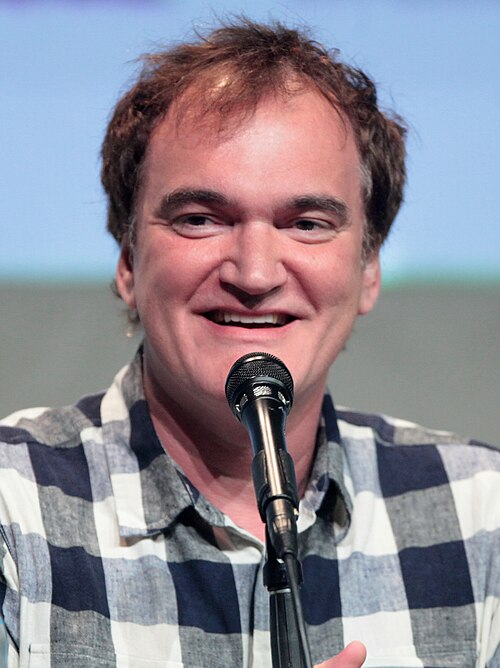
Knoxville-born director Quentin Tarantino is a critically acclaimed writer, actor, and producer. His films are known for intensity, violence, profanity, and pop culture references that keep viewers on the edge of their seats. Tarantino started in the film industry with 1992’s Reservoir Dogs, followed by 1994’s Pulp Fiction. The director has won countless film awards, including seven Oscars, seven BAFTAs, and eight Golden Globes.
For more recommendations, you might also enjoy exploring best adventure books, best David Sedaris books, or authors like Bill Bryson.
Table of Contents
Open Table of Contents
-
- Quentin Tarantino Novels
- Here Are The Best Authors Like Quentin Tarantino
- 1. Frank Miller, 1957 -
- 2. Bret Easton Ellis
- 3. Ian Fleming, 1908 - 1964
- 4. David Wong (Jason Pargin), 1975 -
- 5. Cormac McCarthy
- 6. Richard Stark (Donald E. Westlake), 1933 - 2008
- 7. Joe Abercrombie
- 8. Joseph Heller, 1923 - 1999
- Quentin Tarantino’s Literary Evolution
- 8 Must-Read Authors Like Quentin Tarantino
- Finding Your Next Read Like Tarantino
Quentin Tarantino Novels
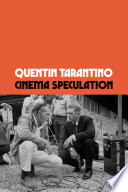
Tarantino got a two-book deal with publisher HarperCollins in 2020. He published Once Upon a Time in Hollywood in 2021, in which he wrote the story of his film by the same name. The book was met with critical acclaim. The second book of the deal,*Cinema Speculation**, Tarantino’s nonfiction debut, combines his personal history, film criticism, and film theory, allowing readers an inside look at how the director’s experience has shaped his view of the film world. The book hit the New York Times bestseller list and received positive reviews from critics.
Here Are The Best Authors Like Quentin Tarantino
1. Frank Miller, 1957 -
Frank Miller looking into the camera
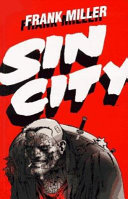
Playwright, artist, and author Frank Miller is well-known for his gritty comic books and graphic novels, including Daredevil, Sin City, and Batman: The Dark Knight Returns. The author states that his style combines the best of American and Japanese comics. Miller has received every major comic book award and was inducted into the Will Eisner Award Hall of Fame in 2015.
The comic prides himself on indulging the world of fantasy that naturally lends itself to the comic world, stating that he doesn’t see the point in trying to make comic books uber-realistic. Regarding the theme of naturism in comic art, Miller stated, “People are attempting to bring a superficial reality to superheroes who are rather stupid. They work best as the flamboyant fantasies they are.”
“We live in the shadow of crime with the unspoken understanding that we are victims.. of fear, of violence, of social impotence. A man has risen to show us that the power is, and always has been, in our hands. We are under siege. He’s showing us that we can resist.”
Frank Miller, Batman: The Dark Knight Returns
2. Bret Easton Ellis
Bret Easton Ellis looking into the camera
Bret Easton Ellis is an American author and director known for 1985’s Less than Zero, 1991’sAmerican Psycho**, 2005’sLunar Park**, and 2010’s*Imperial Bedrooms**. While Ellis is known for churning out bestsellers, some of his work has also been met with literary criticism for being overly violent (especially towards women).
The author was just 21 years old when he published Less Than Zero, and he was instantly famous following the novel’s success. Ellis met controversy in 2010 when he stated that the infamous protagonist of American Psycho, Patrick Bateman, was not based on Ellis’ father, as he previously stated. Instead, he said that the book was based on himself, his lifestyle, and his anger at the time.
“My pain is constant and sharp and I do not hope for a better world for anyone, in fact I want my pain to be inflicted on others. I want no one to escape, but even after admitting this there is no catharsis, my punishment continues to elude me and I gain no deeper knowledge of myself; no new knowledge can be extracted from my telling. This confession has meant nothing.”
Bret Easton Ellis, American Psycho
3. Ian Fleming, 1908 - 1964
The prolific James Bond author, Ian Fleming’s name is synonymous with literary excellence. Fleming’s first James Bond novel, Casino Royale, was published in 1952. The book had to undergo three printing cycles to meet consumer demand. Fleming followed the success of his debut novel with eleven subsequent novels and two short story collections. The James Bond series is one of the best-selling fiction book collections ever written. To date, Fleming has sold more than 100 million copies around the world. Sadly, the author passed away at 56, and twoJames Bond novels were published after his death.
“Today we are fighting Communism. Okay. If I’d been alive fifty years ago, the brand of Conservatism we have today would have been damn near called Communism and we should have been told to go and fight that. History is moving pretty quickly these days and the heroes and villains keep on changing parts.”
Ian Fleming, Casino Royale
4. David Wong (Jason Pargin), 1975 -
Jason Pargin, known to most by his pen name, David Wong, is a humor writer known both for his work as the former executive editor of Cracked.com and for his novels, including 2007’s John Dies at the End, 2015’sFuturistic Violence and Fancy Suits**, and 2022’sIf This Book Exists, You’re in the Wrong Universe**.
Pargin grew his interest in humor writing by reading Mad Magazine as a child. The author retired his pen name in 2020, stating, “It’s not like I’m under the Witness Protection program or anything. I was just trying to keep things simple in my personal life.” Fans of the author’s work can look for his continued writings under his real name.
“And watch out for Molly. See if she does anything unusual. There’s something I don’t trust about the way she exploded and then came back from the dead like that.”
David Wong, John Dies at the End
5. Cormac McCarthy
Cormac McCarthy is known for his work in both Western and apocalyptic settings. Like Tarantino, McCarthy’s writing style is gritty and violent. Several of the author’s works have been made into feature films, including 1992’s All the Pretty Horses, 2005’sNo Country for Old Men**, and 2007’sThe Road**, for which he won both the James Tait Black Memorial Prize for Fiction and the Pulitzer Prize for Fiction.
In addition to writing, McCarthy also works with the Sante Fe Institute, where he explores the origin of language and the human unconscious. In 2012, McCarthy was inducted into the American Philosophical Society.
“He stood at the window of the empty cafe and watched the activities in the square and he said that it was good that God kept the truths of life from the young as they were starting out or else they’d have no heart to start at all.”
Cormac McCarthy, All the Pretty Horses
6. Richard Stark (Donald E. Westlake), 1933 - 2008
Richard Stark looking into the camera
Richard Stark was the pen name used by Donald E. Westlake for his books starring Parker, a professional criminal. Westlake wrote under several pen names, including Rolfe Passer, Alan Marshall, James Blue, Edwin West, and Don Holliday.
Westlake wrote 24 books starring Parker. The protagonist had few positive qualities, and fans of Westlake love following his characters as they do whatever they need to do to get the job done. Parker’s first name is never revealed, and in several novels, Westlake hints that Parker may not even be the character’s true first name.
“I’m going to drink his blood, I’m going to chew up his heart and spit it into the gutter for the dogs to raise a leg at. I’m going to peel the skin off him and rip out his veins and hang him with them.”
Richard Stark, The Hunter
7. Joe Abercrombie
Joe Abercrombie looking at the camera, smiling
Joe Abercrombie is a British fantasy author who first gained recognition for The **First Law trilogy. The series’ first book,The Blade Itself**, was released in 2006, followed byBefore They Are Hanged* (2007) and Last Argument of Kings (2008).*First Law* books follow three powers as they fight for dominance: the North, The union, and the Gurkish Empire.
Abercrombie’s writing offers the point of view of six characters throughout the novels. The author earned a spot as a 2008 finalist for the John W. Campbell Award for Best New Author. Abercrombie has also written several short fiction stories set in the First Law world, collected into the anthology Sharp Ends: Stories from the World of the First Law, released in 2016.
“Proof is boring. Proof is tiresome. Proof is an irrelevance. People would far rather be handed an easy lie than search for a difficult truth, especially if it suits their own purposes.”
Joe Abercrombie, Last Argument of Kings
8. Joseph Heller, 1923 - 1999
Brooklyn native Joseph Heller is best known for his 1961 novel Catch-22, a satirical story that follows the experience of John Yossarian, an Army Air Corps Captain who works to find ways to get out of serving in combat. While the novel is regarded as one of the best works of American literature in today’s circles, it was criticized when it was first released.
The book sold just 30,000 copies in the United States market throughout its first year. Catch-22 was received differently in the UK—it hit the bestseller list just a week after its release. The book was made into a feature film starring Alan Arkin, released in 1970.
“Man was matter, that was Snowden’s secret. Drop him out a window, and he’ll fall. Set fire to him and he’ll burn. Bury him and he’ll rot, like other kinds of garbage. The spirit gone, man is garbage. That was Snowden’s secret. Ripeness was all.”
Joseph Heller, Catch-22
Quentin Tarantino’s Literary Evolution
Tarantino secured a two-book deal with publisher HarperCollins in 2020, marking his serious entry into literature. He published Once Upon a Time in Hollywood in 2021, expanding the story of his film by the same name. The book received critical acclaim for its deep character development and insider Hollywood knowledge.
His second book, Cinema Speculation, became Tarantino’s nonfiction debut, combining personal history, film criticism, and theory. This 2022 release hit the New York Times bestseller list and offered readers unprecedented insight into how the director’s experiences shaped his worldview.
What’s New in 2025: Following the success of his first two books, Tarantino has hinted at potential future literary projects, including a possible crime novel that would showcase his signature non-linear storytelling in pure written form. His growing reputation as an author has also led to increased interest in writers who share his distinctive voice and themes.
8 Must-Read Authors Like Quentin Tarantino
You might also enjoy best Irish authors, best British authors, best American authors.
1. Frank Miller, 1957 -
Playwright, artist, and author Frank Miller is renowned for his gritty comic books and graphic novels, including Daredevil, Sin City, and Batman: The Dark Knight Returns. Miller combines the best of American and Japanese comics, creating a unique visual-literary hybrid that matches Tarantino’s genre-blending approach.
Miller has received every major comic book award and was inducted into the Will Eisner Award Hall of Fame in 2015. Like Tarantino, he doesn’t shy away from violence or moral ambiguity. His work deliberately embraces the fantastical rather than forcing false realism onto inherently dramatic stories.
Why Tarantino fans will love Miller: Both artists excel at stylized violence, morally complex characters, and stories that blur the line between homage and innovation. Miller’s work has directly influenced several Tarantino films, particularly the visual style of Kill Bill.
“We live in the shadow of crime with the unspoken understanding that we are victims of fear, of violence, of social impotence. A man has risen to show us that the power is, and always has been, in our hands.” — Frank Miller, Batman: The Dark Knight Returns
2. Bret Easton Ellis
Bret Easton Ellis is an American author and director known for 1985’s Less than Zero, 1991’s American Psycho, 2005’s Lunar Park, and 2010’s Imperial Bedrooms. While Ellis churns out bestsellers, his work has attracted controversy for its unflinching portrayal of violence, particularly in American Psycho.
Ellis was just 21 when he published Less Than Zero, achieving instant fame. His 2010 revelation that American Psycho’s Patrick Bateman was based on his own anger and lifestyle rather than his father added another layer of controversy to his already provocative reputation.
The Tarantino Connection: Both writers fearlessly explore the dark underbelly of American culture, using extreme violence as a lens to examine society’s moral decay. They share a talent for creating memorable, quotable dialogue and aren’t afraid to make audiences uncomfortable.
“My pain is constant and sharp and I do not hope for a better world for anyone, in fact I want my pain to be inflicted on others.” — Bret Easton Ellis, American Psycho
3. Ian Fleming, 1908 - 1964
The legendary James Bond creator Ian Fleming established many conventions that Tarantino would later subvert and celebrate. Fleming’s first Bond novel, Casino Royale, was published in 1952 and required three printing cycles to meet demand. The series became one of the best-selling fiction collections ever written, with over 100 million copies sold worldwide.
Fleming’s influence on modern action and crime fiction cannot be overstated. His combination of sophisticated violence, international intrigue, and pop culture elements created a template that countless writers and filmmakers—including Tarantino—would later build upon.
The Legacy Factor: While Fleming’s style is more traditional than Tarantino’s, both understand how to blend high stakes action with memorable characters and razor-sharp dialogue. Tarantino’s films often reference and rework classic spy and crime tropes that Fleming helped establish.
“Today we are fighting Communism. If I’d been alive fifty years ago, the brand of Conservatism we have today would have been damn near called Communism.” — Ian Fleming, Casino Royale
4. David Wong (Jason Pargin), 1975 -
Jason Pargin, known by his former pen name David Wong, is a humor writer and former executive editor of Cracked.com. His novels include 2007’s John Dies at the End, 2015’s Futuristic Violence and Fancy Suits, and 2022’s If This Book Exists, You’re in the Wrong Universe.
Pargin developed his voice reading Mad Magazine as a child. He retired the David Wong pen name in 2020, explaining he wanted to simplify his personal life. His work combines horror, comedy, and pop culture references in ways that feel distinctly contemporary.
Why This Matters: Like Tarantino, Pargin masterfully blends genres and uses pop culture as both reference point and storytelling device. Both create works that are simultaneously deeply serious and genuinely funny, often in the same scene.
“And watch out for Molly. See if she does anything unusual. There’s something I don’t trust about the way she exploded and then came back from the dead like that.” — David Wong, John Dies at the End
5. Cormac McCarthy
Cormac McCarthy is known for his work in Western and apocalyptic settings. Like Tarantino, McCarthy’s writing style is gritty and violent. Several of his works have been adapted into films, including 1992’s All the Pretty Horses, 2005’s No Country for Old Men, and 2007’s The Road, which won both the James Tait Black Memorial Prize for Fiction and the Pulitzer Prize for Fiction.
McCarthy also works with the Santa Fe Institute, exploring the origin of language and the human unconscious. In 2012, he was inducted into the American Philosophical Society.
The Parallel Appeal: Both artists use violence not for shock value alone, but to explore fundamental questions about human nature and morality. Their protagonists often operate in moral gray areas where traditional concepts of good and evil become meaningless.
“He stood at the window of the empty cafe and watched the activities in the square and he said that it was good that God kept the truths of life from the young as they were starting out or else they’d have no heart to start at all.” — Cormac McCarthy, All the Pretty Horses
6. Richard Stark (Donald E. Westlake), 1933 - 2008
Richard Stark was the pen name Donald E. Westlake used for his books starring Parker, a professional criminal. Westlake wrote under several aliases, but the Parker series—24 books in total—represents some of his finest work.
Parker had few redeeming qualities, and fans loved following his characters as they did whatever necessary to complete their jobs. Parker’s first name is never revealed, and Westlake hints throughout the series that “Parker” might not even be his real surname.
The Crime Fiction Connection: Both Westlake and Tarantino understand that the most compelling criminals are those who follow their own strict codes. Their protagonists may be violent and morally questionable, but they operate according to clear, internal logic that readers can follow and even respect.
“I’m going to drink his blood, I’m going to chew up his heart and spit it into the gutter for the dogs to raise a leg at.” — Richard Stark, The Hunter
7. Joe Abercrombie
British fantasy author Joe Abercrombie gained recognition with The First Law trilogy: The Blade Itself (2006), Before They Are Hanged (2007), and Last Argument of Kings (2008). The series follows three powers fighting for dominance: the North, The Union, and the Gurkish Empire.
Abercrombie’s writing offers multiple character perspectives throughout his novels. He earned a spot as a 2008 finalist for the John W. Campbell Award for Best New Author and has written several short fiction stories set in the First Law world.
The Subversion Game: Like Tarantino with film genres, Abercrombie takes fantasy tropes and subverts them, creating morally complex characters in a world where traditional heroes and villains don’t exist. Both authors excel at disappointing reader expectations in satisfying ways.
“Proof is boring. Proof is tiresome. Proof is an irrelevance. People would far rather be handed an easy lie than search for a difficult truth.” — Joe Abercrombie, Last Argument of Kings
8. Joseph Heller, 1923 - 1999
Brooklyn native Joseph Heller is best known for his 1961 novel Catch-22, a satirical story following Army Air Corps Captain John Yossarian’s attempts to avoid combat duty. While regarded today as one of the best works of American literature, it was initially criticized and sold only 30,000 copies in its first year in the United States.
The book found immediate success in the UK, hitting the bestseller list within a week of release. Catch-22 was adapted into a 1970 film starring Alan Arkin.
The Satirical Edge: Both Heller and Tarantino use dark humor to examine serious subjects. They share a talent for finding absurdity in violence and bureaucracy, creating works that are simultaneously entertaining and deeply critical of American institutions.
“Man was matter, that was Snowden’s secret. Drop him out a window, and he’ll fall. Set fire to him and he’ll burn. The spirit gone, man is garbage.” — Joseph Heller, Catch-22
Finding Your Next Read Like Tarantino
These authors share Tarantino’s commitment to unflinching storytelling, memorable dialogue, and moral complexity. Whether you’re drawn to Ellis’s psychological intensity, McCarthy’s philosophical violence, or Abercrombie’s fantasy subversion, each offers a unique take on the dark themes that make Tarantino’s work so compelling.
Start with any author whose quote resonates most strongly with you—that’s usually the best indicator of whose full-length work you’ll enjoy. Remember, like Tarantino’s films, these books aren’t for everyone, but for readers who appreciate complex, challenging narratives, they represent some of the finest writing in their respective genres.
1. Frank Miller, 1957 -
Playwright, artist, and author Frank Miller is renowned for his gritty comic books and graphic novels, including Daredevil, Sin City, and Batman: The Dark Knight Returns. Miller combines the best of American and Japanese comics, creating a unique visual-literary hybrid that matches Tarantino’s genre-blending approach.
Miller has received every major comic book award and was inducted into the Will Eisner Award Hall of Fame in 2015. Like Tarantino, he doesn’t shy away from violence or moral ambiguity. His work deliberately embraces the fantastical rather than forcing false realism onto inherently dramatic stories.
Why Tarantino fans will love Miller: Both artists excel at stylized violence, morally complex characters, and stories that blur the line between homage and innovation. Miller’s work has directly influenced several Tarantino films, particularly the visual style of Kill Bill.
“We live in the shadow of crime with the unspoken understanding that we are victims of fear, of violence, of social impotence. A man has risen to show us that the power is, and always has been, in our hands.” — Frank Miller, Batman: The Dark Knight Returns
2. Bret Easton Ellis
Bret Easton Ellis is an American author and director known for 1985’s Less than Zero, 1991’s American Psycho, 2005’s Lunar Park, and 2010’s Imperial Bedrooms. While Ellis churns out bestsellers, his work has attracted controversy for its unflinching portrayal of violence, particularly in American Psycho.
Ellis was just 21 when he published Less Than Zero, achieving instant fame. His 2010 revelation that American Psycho’s Patrick Bateman was based on his own anger and lifestyle rather than his father added another layer of controversy to his already provocative reputation.
The Tarantino Connection: Both writers fearlessly explore the dark underbelly of American culture, using extreme violence as a lens to examine society’s moral decay. They share a talent for creating memorable, quotable dialogue and aren’t afraid to make audiences uncomfortable.
“My pain is constant and sharp and I do not hope for a better world for anyone, in fact I want my pain to be inflicted on others.” — Bret Easton Ellis, American Psycho
3. Ian Fleming, 1908 - 1964
The legendary James Bond creator Ian Fleming established many conventions that Tarantino would later subvert and celebrate. Fleming’s first Bond novel, Casino Royale, was published in 1952 and required three printing cycles to meet demand. The series became one of the best-selling fiction collections ever written, with over 100 million copies sold worldwide.
Fleming’s influence on modern action and crime fiction cannot be overstated. His combination of sophisticated violence, international intrigue, and pop culture elements created a template that countless writers and filmmakers—including Tarantino—would later build upon.
The Legacy Factor: While Fleming’s style is more traditional than Tarantino’s, both understand how to blend high stakes action with memorable characters and razor-sharp dialogue. Tarantino’s films often reference and rework classic spy and crime tropes that Fleming helped establish.
“Today we are fighting Communism. If I’d been alive fifty years ago, the brand of Conservatism we have today would have been damn near called Communism.” — Ian Fleming, Casino Royale
4. David Wong (Jason Pargin), 1975 -
Jason Pargin, known by his former pen name David Wong, is a humor writer and former executive editor of Cracked.com. His novels include 2007’s John Dies at the End, 2015’s Futuristic Violence and Fancy Suits, and 2022’s If This Book Exists, You’re in the Wrong Universe.
Pargin developed his voice reading Mad Magazine as a child. He retired the David Wong pen name in 2020, explaining he wanted to simplify his personal life. His work combines horror, comedy, and pop culture references in ways that feel distinctly contemporary.
Why This Matters: Like Tarantino, Pargin masterfully blends genres and uses pop culture as both reference point and storytelling device. Both create works that are simultaneously deeply serious and genuinely funny, often in the same scene.
“And watch out for Molly. See if she does anything unusual. There’s something I don’t trust about the way she exploded and then came back from the dead like that.” — David Wong, John Dies at the End
5. Cormac McCarthy
Cormac McCarthy is known for his work in Western and apocalyptic settings. Like Tarantino, McCarthy’s writing style is gritty and violent. Several of his works have been adapted into films, including 1992’s All the Pretty Horses, 2005’s No Country for Old Men, and 2007’s The Road, which won both the James Tait Black Memorial Prize for Fiction and the Pulitzer Prize for Fiction.
McCarthy also works with the Santa Fe Institute, exploring the origin of language and the human unconscious. In 2012, he was inducted into the American Philosophical Society.
The Parallel Appeal: Both artists use violence not for shock value alone, but to explore fundamental questions about human nature and morality. Their protagonists often operate in moral gray areas where traditional concepts of good and evil become meaningless.
“He stood at the window of the empty cafe and watched the activities in the square and he said that it was good that God kept the truths of life from the young as they were starting out or else they’d have no heart to start at all.” — Cormac McCarthy, All the Pretty Horses
6. Richard Stark (Donald E. Westlake), 1933 - 2008
Richard Stark was the pen name Donald E. Westlake used for his books starring Parker, a professional criminal. Westlake wrote under several aliases, but the Parker series—24 books in total—represents some of his finest work.
Parker had few redeeming qualities, and fans loved following his characters as they did whatever necessary to complete their jobs. Parker’s first name is never revealed, and Westlake hints throughout the series that “Parker” might not even be his real surname.
The Crime Fiction Connection: Both Westlake and Tarantino understand that the most compelling criminals are those who follow their own strict codes. Their protagonists may be violent and morally questionable, but they operate according to clear, internal logic that readers can follow and even respect.
“I’m going to drink his blood, I’m going to chew up his heart and spit it into the gutter for the dogs to raise a leg at.” — Richard Stark, The Hunter
7. Joe Abercrombie
British fantasy author Joe Abercrombie gained recognition with The First Law trilogy: The Blade Itself (2006), Before They Are Hanged (2007), and Last Argument of Kings (2008). The series follows three powers fighting for dominance: the North, The Union, and the Gurkish Empire.
Abercrombie’s writing offers multiple character perspectives throughout his novels. He earned a spot as a 2008 finalist for the John W. Campbell Award for Best New Author and has written several short fiction stories set in the First Law world.
The Subversion Game: Like Tarantino with film genres, Abercrombie takes fantasy tropes and subverts them, creating morally complex characters in a world where traditional heroes and villains don’t exist. Both authors excel at disappointing reader expectations in satisfying ways.
“Proof is boring. Proof is tiresome. Proof is an irrelevance. People would far rather be handed an easy lie than search for a difficult truth.” — Joe Abercrombie, Last Argument of Kings