
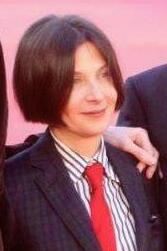
If The Secret History pulled you into a world of obsessive students, moral corruption, and sentences you wanted to read twice, these 13 authors like Donna Tartt write with the same intoxicating intensity.
Donna Tartt has published exactly three novels in over thirty years, and every single one has been an event. The Secret History (1992) invented the dark academia genre before it had a name — six classics students at a small Vermont college commit a murder, and the novel traces how that act destroys them. The Little Friend (2002) is a Southern gothic about a girl investigating her brother’s unsolved murder. The Goldfinch (2013) won the Pulitzer Prize, following a boy who steals a painting after a terrorist bombing at the Metropolitan Museum of Art.
Tartt writes with the patience and precision of someone who knows she’ll take a decade between books. Her sentences are long, ornate, and almost hypnotically beautiful. Her characters are deeply flawed intellectuals who convince themselves that their education makes them exceptional — and then discover the devastating consequences of that belief. No one writes about the seductive danger of ideas quite like Tartt.
For more recommendations, explore our guides to best American authors, best classic literature books, and best Japanese authors.
Authors Like Donna Tartt
1. Evelyn Waugh
Evelyn Waugh’s Brideshead Revisited is one of the direct ancestors of The Secret History — a narrator looking back on his intense friendship with an aristocratic family at Oxford in the 1920s. The novel is soaked in nostalgia, beauty, and the slow realization that paradise was always an illusion.
Tartt has acknowledged Waugh’s influence, and the parallels are obvious: a young narrator seduced by a world of wealth and intellect, the gradual disillusionment, the gorgeous prose describing a lifestyle that’s morally bankrupt beneath the surface. Waugh’s satirical edge is sharper than Tartt’s, but both writers understand the fatal attraction of privilege.
“I should like to bury something precious in every place where I’ve been happy and then, when I was old and ugly and miserable, I could come back and dig it up and remember.”
Evelyn Waugh, Brideshead Revisited
2. F. Scott Fitzgerald
F. Scott Fitzgerald’s The Great Gatsby does in 180 pages what many writers can’t manage in 600 — captures the seductive glamour and moral rot of wealth through the eyes of an entranced narrator. Like Tartt, Fitzgerald writes about people who build elaborate fantasies around themselves and destroy everyone who gets close.
The connection between Gatsby and The Secret History runs deep. Both use a first-person narrator who is simultaneously drawn to and appalled by a charismatic figure. Both are about the American obsession with reinvention. And both feature prose so beautiful it almost makes you forgive the terrible things the characters do.
“So we beat on, boats against the current, borne back ceaselessly into the past.”
F. Scott Fitzgerald, The Great Gatsby
3. Patricia Highsmith
Patricia Highsmith created Tom Ripley, one of literature’s greatest sociopaths, in The Talented Mr. Ripley. Ripley charms, manipulates, and murders his way through 1950s Europe, and Highsmith makes you root for him anyway. She wrote five Ripley novels, each more unsettling than the last.
Highsmith shares Tartt’s fascination with amoral intellectuals who believe they’re above conventional rules. Her prose is cooler and more detached than Tartt’s — she doesn’t seduce you with beauty; she seduces you with logic. If Henry Winter from The Secret History had his own series, it would read like the Ripley novels.
“I’ll always be honest with you. But I can’t promise to tell the truth.”
Patricia Highsmith, The Talented Mr. Ripley
4. Carlos Ruiz Zafón
Carlos Ruiz Zafón’s The Shadow of the Wind is set in post-Civil War Barcelona, where a boy discovers a forgotten novel and becomes obsessed with finding out what happened to its author. The book is atmospheric to the point of being intoxicating — Barcelona becomes a labyrinth of secrets, and the mystery deepens with every chapter.
Zafón, who died in 2020, wrote the kind of literary page-turners that Tartt specializes in. Both writers prove that literary fiction doesn’t have to be slow, and thrillers don’t have to be shallow. The Shadow of the Wind and its three companion novels (the Cemetery of Forgotten Books series) are essential reading for anyone who loved the bookish, atmospheric quality of The Goldfinch.
“Every book, every volume you see here, has a soul. The soul of the person who wrote it and of those who read it and lived and dreamed with it.”
Carlos Ruiz Zafón, The Shadow of the Wind
5. Kazuo Ishiguro
Kazuo Ishiguro won the Nobel Prize in Literature in 2017, and his novels are masterclasses in what’s left unsaid. Never Let Me Go is narrated by a woman looking back on her childhood at a mysterious English boarding school, and the slow revelation of what that school really is becomes one of the most devastating reading experiences in modern fiction.
Ishiguro and Tartt share a technique: the unreliable retrospective narrator who gradually reveals horrible truths through seemingly innocent memories. The Remains of the Day does the same thing with a butler looking back on his service to an aristocratic household. Both writers understand that the most powerful stories are the ones characters tell themselves to avoid facing reality.
“What I’m not sure about, is if our lives have been so different from the lives of the people we save.”
Kazuo Ishiguro, Never Let Me Go
6. Jeffrey Eugenides
Jeffrey Eugenides’ The Virgin Suicides is narrated by a group of men looking back on their adolescent obsession with five sisters who killed themselves in 1970s suburban Michigan. The collective first-person narration creates an effect similar to The Secret History — a group trying to make sense of tragedy they were powerless to prevent. If you appreciate authors like Tartt who work slowly on each book, you might also appreciate refining your own writing with Grammarly, which catches the kind of errors that undermine otherwise strong prose.
Eugenides published The Virgin Suicides in 1993, just a year after The Secret History, and both novels defined the literary sensibility of the 1990s. His Pulitzer-winning Middlesex is equally ambitious — a multigenerational epic narrated by a person who is intersex. Eugenides writes beautifully about obsession, memory, and the impossibility of truly understanding other people.
“We felt the imprisonment of being a girl, the way it made your mind active and your body idle.”
Jeffrey Eugenides, The Virgin Suicides
7. Hanya Yanagihara
Hanya Yanagihara’s A Little Life is a 720-page novel about four college friends in New York, centred on Jude, a man concealing a history of extreme abuse. It’s relentlessly dark, sometimes unbearably so, and it polarized critics — some called it exploitative, others called it a masterpiece. It sold millions of copies and became one of the most discussed novels of the 2010s.
Yanagihara shares Tartt’s willingness to write at great length about characters trapped by their pasts. Both authors demand a significant time investment and reward it with emotional intensity that lighter novels can’t touch. A Little Life is not for everyone, but readers who connected with the darker elements of The Secret History will find familiar territory.
“You won’t understand what I mean now, but someday you will: the only trick of friendship, I think, is to find people who are better than you are.”
Hanya Yanagihara, A Little Life
8. M.L. Rio
M.L. Rio’s If We Were Villains is the most direct descendant of The Secret History in contemporary fiction. Seven Shakespeare students at a prestigious conservatory are consumed by rivalry and ambition, and when one of them dies, the survivor narrates the story from prison ten years later. The structure, the setting, the themes — it’s all Tartt-adjacent, and Rio executes it beautifully.
Rio earned a Master’s degree in Shakespeare studies, and the novel’s Shakespearean framework isn’t just decoration — it drives the characters’ behavior. They can’t stop performing, even when the stakes become life and death. If you’ve read The Secret History multiple times and wish there were more books exactly like it, If We Were Villains is the closest thing.
“We were always, by nature, parsing the difference between appearance and reality.”
M.L. Rio, If We Were Villains
9. Chad Harbach
Chad Harbach’s The Art of Fielding is set at a small liberal arts college on the shore of Lake Michigan, following a gifted shortstop whose sudden inability to throw straight unravels the lives of everyone around him. It’s a campus novel about obsession, perfectionism, and what happens when your identity is tied to a single ability.
Harbach spent nearly a decade writing this novel, and the patience shows. Like Tartt, he creates a claustrophobic college world where relationships are intense and consuming. The book was a bestseller and launched its own mini-genre of literary sports fiction. It shares The Secret History’s understanding that the pressure cooker of campus life can produce both brilliance and destruction.
“To live in the body of a young athlete was to live in the grip of an illusion.”
Chad Harbach, The Art of Fielding
10. Ian McEwan
Ian McEwan’s Atonement opens with a lie told by a thirteen-year-old girl that destroys two lives, then follows the consequences across decades and a world war. McEwan writes with surgical precision about the moment when everything goes wrong — and about the impossibility of undoing damage once it’s done.
McEwan and Tartt both write about guilt with extraordinary sophistication. In The Secret History, Richard Papen knows what his friends have done and can’t escape it. In Atonement, Briony Tallis spends her entire life trying to atone for a single childish mistake. Both novels argue that understanding your own story doesn’t free you from it.
“Was everyone else really as alive as she was? If so, the world, the social world, was unbearably complicated.”
Ian McEwan, Atonement
11. Meg Wolitzer
Meg Wolitzer’s The Interestings follows a group of friends from their teenage summers at an arts camp through their adult lives, tracking how talent, ambition, and jealousy shape their relationships over decades. Like Tartt, Wolitzer is interested in what happens to brilliant young people when the real world doesn’t match their self-image.
Wolitzer writes about creative communities with the same insider knowledge that Tartt brings to academic ones. The Female Persuasion and The Wife explore power dynamics in intellectual and artistic worlds. Her characters are smart, self-aware, and still unable to stop themselves from making terrible choices.
“The moment you made the decision to be interesting, you already were.”
Meg Wolitzer, The Interestings
12. Jess Lourey
Jess Lourey’s Litani and The Quarry Girls are dark, atmospheric novels rooted in real criminal cases. Lourey writes about small communities hiding enormous secrets, and her prose has the kind of creeping dread that Tartt achieves in The Little Friend. She brings a true-crime sensibility to literary fiction.
Lourey’s work is darker and more genre-adjacent than Tartt’s, but both writers share an obsession with how communities protect themselves by sacrificing their most vulnerable members. Bloodline and Unspeakable Things are equally haunting. If you loved the Southern gothic elements of The Little Friend, Lourey’s small-town horror will feel familiar.
“Every small town has its secrets. Some are just buried deeper than others.”
Jess Lourey, Litani
13. Catherine Lacey
Catherine Lacey’s Biography of X is a formally ambitious novel set in an alternate America, written as a widow’s investigation into her dead wife’s secret past. The novel plays with biography, identity, and the impossibility of truly knowing another person — themes that Tartt explores in all three of her books.
Lacey represents the next generation of literary fiction writers who share Tartt’s ambition and intellectual range. Biography of X was one of the most acclaimed novels of 2023, and it rewards the same kind of careful, patient reading that Tartt’s novels demand. If you want something that pushes the boundaries of what literary fiction can do, Lacey delivers.
“The dead can never correct what the living choose to remember.”
Catherine Lacey, Biography of X